Bengaluru-based space technology startup GalaxEye Mission Drishti on Tuesday said its maiden has successfully validated key technologies and mission capabilities, paving the way for the launch of two next-generation OptoSAR satellites over the next 24 months despite an anomaly that affected the spacecraft after launch.
GalaxEye Mission Drishti Validates Critical Space Technologies
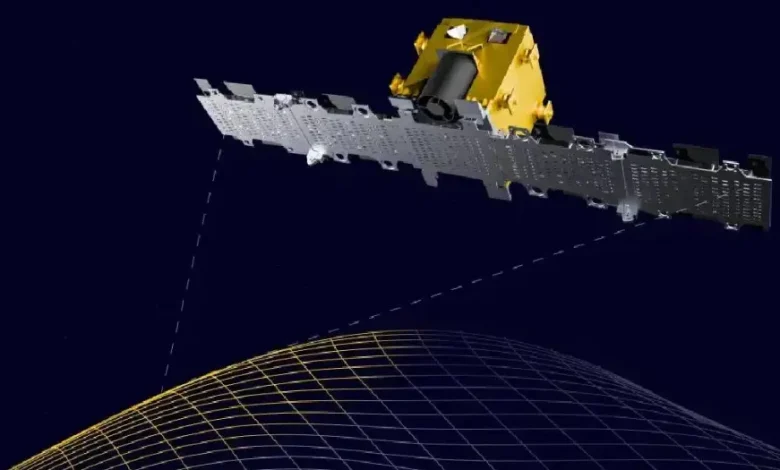
The company said Mission Drishti — launched aboard a SpaceX mission on May 3 as the world’s first OptoSAR satellite — successfully established communication and completed a major portion of its Launch and Early Orbit Phase (LEOP) and validated critical spacecraft systems, deployment mechanisms, attitude control, onboard computing and communications.
It demonstrated GalaxEye’s full in-house mission operations capability through its Mission Control Centre in Bengaluru, strengthening the company’s technological capabilities and market confidence, according to the company.
During its operational phase, the satellite successfully validated critical technologies, operational processes and infrastructure required to design, build, launch and operate advanced Earth observation systems.
Solar Storm Caused Communication Loss
The successful launch of Mission Drishti also received recognition from Prime Minister Narendra Modi and industry leaders, highlighting the mission’s significance for India’s private space ecosystem and global Earth observation capabilities.
However, GalaxEye said the spacecraft encountered an anomaly during the final stage of LEOP following a geomagnetic solar storm. Preliminary analysis indicates that radiation associated with the extreme space weather event likely affected a critical onboard system.




Communication with the satellite subsequently became intermittent and was eventually lost. While recovery efforts are continuing, the likelihood of restoring contact currently appears low, the company said.
Two New OptoSAR Satellites Planned
“Mission Drishti marks the culmination of years of innovation, engineering and execution by our team. While the satellite experienced an anomaly following an extreme space weather event, the mission has provided invaluable engineering insights that will directly strengthen our future missions,” said Suyash Singh, Founder and CEO of GalaxEye.
He said the company is accelerating the transition towards bringing a significant portion of its supply chain, manufacturing and satellite development processes in-house to gain greater visibility and control over the entire value chain.
Building on the lessons from Mission Drishti, GalaxEye said it is incorporating the learnings into its next-generation spacecraft architecture and plans to launch two new OptoSAR satellites within the next 24 months while significantly expanding its in-house capabilities to strengthen quality, reliability and execution.
Read More:
Deep-tech startups to global investors showcased ahead of Bharat Innovates 2026
Govt selects Top 10 AI startups in India for international expansion programme
IIT Madras to showcase deep-tech innovations, startups at Bharat Innovates 2026