
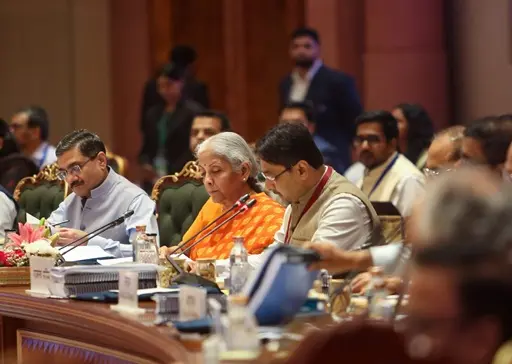
The 57th GST Council meeting chaired by Finance Minister Nirmala Sitharaman began in New Delhi on Thursday to discuss the next phase of GST reforms that the government plans to implement.
GST Council meeting begins in Delhi
The participants include Chief Ministers of Delhi, Goa, Haryana, Jammu & Kashmir, Karnataka, Kerala, Maharashtra, and Meghalaya; Deputy Chief Ministers of Manipur and Telangana; the Finance Ministers and senior members of States and UTs, besides Secretary of Department of Revenue, Chairman and Members of CBIC and senior officials of the Ministry of Finance.
GST reforms focus on five key areas
The GST reforms that are being considered include proposals to speed up refunds, make it easier to register companies and introduce a trust-based administration by taking a large number of offences out of the criminal provisions of GST, according to sources.
The proposals focus on five key areas which include process reforms, structural reforms, ease of doing business, e-commerce and exports of services.
Faster GST refunds proposed
As part of the process reforms in the GST system, refunds are proposed to be acknowledged in 10 days, with 90 per cent released on a risk check after necessary details would be drawn from customs and banking systems in an automated mode in order to further facilitate the ease of doing business.
GST litigation and notices may be streamlined
In the case of litigation, a common standard for notices, hearings and orders, and no notice at all below a threshold is being worked out.




For filing returns, the objective is to streamline the process in which the corrections made are recorded properly so that there is a trail of the changes and corresponding changes are recorded in the buyer’s ledger automatically. This is called invoice matching so that input tax credit is validated at the stage of recording itself. This would avoid a large number of mismatch notices being issued.
GST registration and business closure to become easier
While for 61 per cent of the taxpayers, registration is already being granted in three working days without an officer, for the remaining taxpayers, process is being streamlined to avoid unnecessary queries and avoid rejections.
Closing a business is to be made as simple as starting one. A registration suspended for a procedural lapse is to restore itself (without the officer’s intervention) once the lapse is made good.
Data-driven GST administration proposed
The basic rationale behind the reforms is that the system should do what can be done from data. The officer should be left with what needs judgement, sources said.
Read More:
GST Council Unlikely to Bring Major Rate Changes in October 7 Meeting
Next-Gen GST Reforms to Simplify Compliance, Says Nirmala Sitharaman