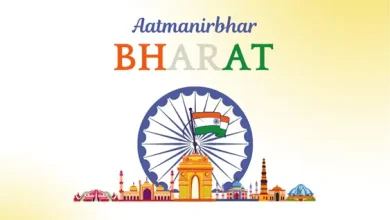
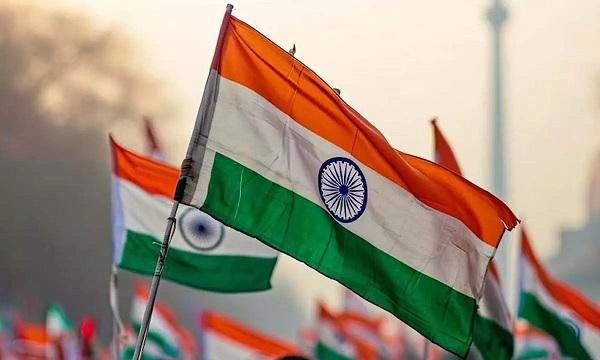
India will celebrate its 79th Independence Day on August 15, 2025. Prime Minister Narendra Modi will address the nation from the ramparts of the Red Fort. Vikasit Bharat @2047 is a vision to transform India into a developed nation by 2047, the 100th year of independence. Vikasit Bharat focuses on various aspects of development, including economic growth, social progress, environmental sustainability and good governance.
On this occasion, we should remember the sacrifices of the freedom fighters and ask ourselves how far we are working to fulfill the aspirations of the freedom fighters. To what extent have we achieved the freedom fighters’ dreams of freedom, equality and fraternity? The well-being of any country depends on the living standards of its citizens. Has India improved its living standards?
Our India is the fourth largest country in the world with a GDP of $4.3 trillion. By 2025, the per capita income of India’s population is estimated to be around Rs. 2.4 lakh ($2,880). About 6.7% of India’s population lives below the poverty line of $1.25. According to the 2024 Global Hunger Index, India is ranked 105th out of 127 countries. According to the Centre for Monitoring the Indian Economy (C, M, IE), the unemployment rate in India is estimated to be 6.8% in July 2025. A recent report by Oxfam International titled “Survival of the Richest: The India Story” highlights the significant income inequality in India. The richest 1% now own more than 40% of the country’s total wealth, while the bottom 50% own just 3%. In addition, India is ranked 96th out of 180 countries in the Corruption Perceptions Index according to Transparency International’s Corruption Perceptions Index in 2024.
Although India’s total expenditure on education by the central and state governments as a percentage of its gross domestic product (GDP) by 2025 is estimated to be 4.64% of GDP, this is lower than the target of 6% set by the New Education Policy (NEP) 2020. In the 2025-26 Union Budget, India has allocated Rs. 99,859 crore (about $11.5 billion USD) for the health sector. This represents an increase of 11% compared to the revised estimates last year. The Health and Family Welfare Department has received the highest allocation of 96% of the total health budget. However, this may change based on annual budget allocations and policy changes. Red tape still has its effect in a liberalized economy.
Nepotism is seen in almost all sectors, but it is most prevalent in business, politics, sports, and entertainment. Unfortunately, we still suffer from social evils such as dowry, female infanticide, gender inequality, domestic violence, and untouchability. Despite all the obstacles, our country has achieved a lot of development in various fields. India ranks first in human resources (population). India is currently ranked 134th out of 193 countries and territories in the Human Development Index (HDI). India is the world’s leading producer of milk, pulses, and jute. It is the second largest producer of rice, wheat, sugarcane, groundnut, vegetables, fruits, and cotton.
It is also a leader in the production of spices, fish, poultry, livestock and horticultural crops. According to reports, India is now ranked third in the world in the number of billionaires after the US and China. India is a major player in global trade, being the world’s 10th largest importer and 16th largest exporter. In 2024, India ranked 15th globally in receiving foreign direct investment (FDI). This is based on the World Investment Report 2025 released by the UN Conference on Trade and Development (UNCTAD). Although India’s rank improved by one place, FDI inflows declined slightly to $27.6 billion. It is ranked 5th in global manufacturing output and space. It is also ranked fifth globally in the number of UNESCO World Heritage Sites. India retained its 18th position in the Information and Technology (I.T) industry competitiveness and 40th position in the Global Innovation Index. The fastest growing sectors include Fintech, renewable energy, biotechnology and digital transactions.


In the era of liberalisation, globalisation and privatisation, we must continue the spirit of Independence Day with continuous economic development and various welfare programmes to protect the world from the Trump policies and wars being followed by the US. The citizens of the country should be aware of the platforms and laws like human rights organisations, public interest litigations, Fourth Estate, Right to Information Act etc. to protect their rights. Equality and fraternity can be achieved only when the economic conditions of the citizens improve. The spirit of freedom fighters can be achieved only with the participation of citizens who are aware of the government and private programmes related to development and welfare.