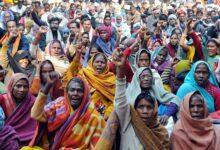
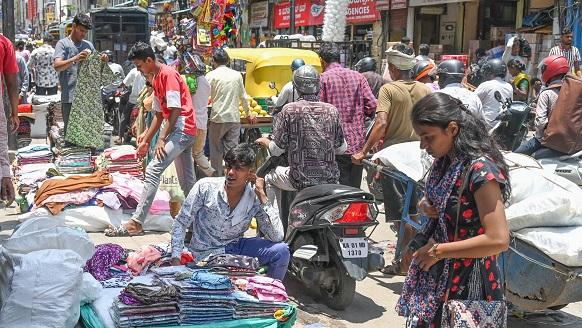
India’s streets are not just arteries of movement; they are the lifeline of small enterprise, livelihoods, and aspirations. Behind every tea stall at a bus stand, every pushcart of vegetables in a crowded market, and every makeshift garment shop near a railway station lies a story of survival. Street vendors are not marginalized actors—they are central to the functioning of the urban economy. Yet, their lives are marked by precarity, vulnerability, and the struggle for legitimacy.
The Hidden Backbone of the Economy:
Street vending is among the largest components of India’s informal economy, providing livelihoods to an estimated 15 million people. For migrants who arrive in cities with little capital, for the unemployed, and for socially disadvantaged groups, vending often represents the only accessible means of survival. The sector is also highly inclusive: women, the elderly, and persons with disabilities are prominently represented.
The contribution of street vendors to India’s economy, though poorly measured, is significant. The National Association of Street Vendors of India estimates that they contribute 4–5% to the country’s GDP. However, the significance of this figure goes beyond economics. Street vendors make essential goods and services affordable to millions of ordinary citizens. By keeping costs low, they democratize consumption, making daily life possible for the poor and the middle classes alike.
Precarity and Vulnerability:
Despite their importance, street vendors continue to live and work in the shadows of the city. The absence of secure legal recognition leaves them exposed to harassment. Municipal authorities and the police frequently evict vendors or confiscate their goods without due process. Such actions are not just economic disruptions-they jeopardize the very survival of families who live day to day on meager margins.




Access to credit is another persistent barrier. Formal banking institutions rarely extend loans to vendors, compelling them to rely on moneylenders who charge exorbitant interest rates. This indebtedness traps many vendors in cycles of poverty. The lack of basic infrastructure-sanitation facilities, drinking water, and electricity—makes their working conditions even more challenging. For women vendors in particular, these gaps are not just inconveniences; they are matters of dignity and safety.
Street vendors also suffer from social stigma. They are often seen as encroachers rather than contributors-as obstacles to urban order rather than participants in it. This perception undercuts their right to be recognized as legitimate economic actors and fuels a cycle of exclusion.
Policy Efforts and Gaps:
The Street Vendors (Protection of Livelihood and Regulation of Street Vending) Act, 2014, was a landmark attempt to correct this imbalance. It recognized vending as a legitimate livelihood and mandated that states conduct surveys, issue identity cards, and establish Town Vending Committees (TVCs) to allocate spaces and resolve disputes. In principle, this framework offered security and dignity. In practice, however, its implementation has been patchy at best. Surveys remain incomplete in many states, TVCs are either defunct or ineffective, and arbitrary evictions continue to undermine the very rights the law sought to guarantee.
The Pradhan Mantri Street Vendor’s Atmanirbhar Nidhi (PM SVANidhi) scheme, launched in 2020, was another significant policy intervention. It offers collateral-free loans to vendors, enabling them to access formal credit for the first time. While this is a welcome initiative, its reach has been uneven. Reports suggest that many vendors remain outside its ambit, either due to a lack of awareness or bureaucratic hurdles. The question remains: has the scheme truly reduced dependence on moneylenders, or has it merely provided a temporary financial cushion?
Rethinking Urban Policy and Society’s Attitude:
The larger issue extends beyond legal frameworks and financial support. What is required is a change in mindset-in the way cities view and accommodate street vendors. Urban planning often treats vendors as an afterthought, relegating them to contested spaces. A more inclusive approach would integrate vending into the design of public spaces, recognizing it as a legitimate and necessary component of urban life.
Equally important is the need to dismantle the stigma attached to vending. Street vendors are part of the cultural and social fabric of Indian cities. The aroma of street food, the sound of hawkers in residential lanes, the sight of roadside bookstalls-these are not nuisances to be erased, but markers of a living, breathing urban culture.
Collectivization offers another path forward: Where vendors have organized into unions or associations, they have been able to negotiate more effectively with authorities, secure access to credit, and resist arbitrary evictions. Strengthening such collective efforts, while ensuring that government schemes are implemented transparently and inclusively, could shift the balance of power towards those who have for too long been at its margins.
The journey of India’s street vendors-from the gullies to the national capital—mirrors both the resilience of the informal economy and the neglect it suffers. To support them is not to offer charity, but to recognize justice. It is not simply about safeguarding livelihoods, but about affirming dignity for millions who keep India’s cities alive and affordable. If India is serious about inclusive growth, the rights of street vendors must not remain a footnote in urban governance. They must be brought to the center office policy and planning. For when the vendors of India thrive, the economy thrives with them.