
Constitutional Education Must Be Mandatory in Classrooms: The Path to Nation-Building

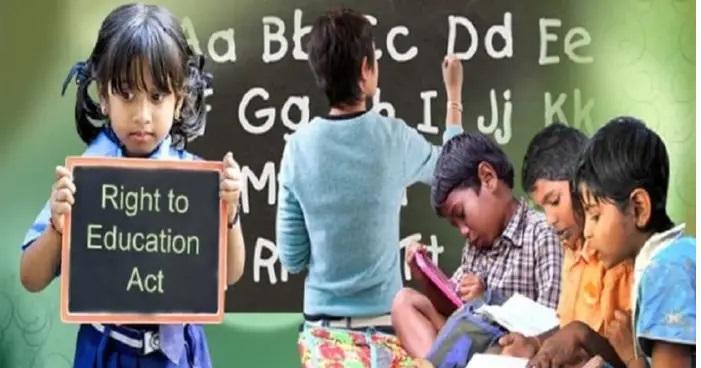
India, the world’s largest democracy, has completed a journey of over seven and a half decades, grounded in the principle of “Unity in Diversity.” The primary reason the nation has endured numerous challenges throughout this long voyage is its Constitution. However, a close examination of the current socio-political landscape clearly reveals a severe lack of basic understanding and practical knowledge of the Constitution among students, who are the future citizens of India.
The Constitution is not merely a text for lawyers and legislators; it is a “Living Document” that impacts the daily lives of every ordinary citizen. In our current education system, the teaching of the Constitution has been relegated to a small segment within “Social Science,” serving only as a topic to be memorized for scores. The consequence is the emergence of a generation that is unaware of its rights and averse to its responsibilities.
The Case for a Separate, Compulsory Subject
In this context, educationalists, constitutional experts, and social scientists are strongly advocating for the immediate necessity of introducing the Constitution as a “Separate Subject.” They argue that it must be made mandatory for every student to achieve a comprehensive understanding of its key elements, fundamental values, Fundamental Rights, and Duties before completing secondary education. Furthermore, passing this subject should be made compulsory.
Students today devote significant attention to subjects like Mathematics and Science but fail to give the same importance to Constitutional Education, which is crucial for shaping them into ideal citizens. Currently, under CBSE, ICSE, and various State Boards, the Constitution/Civics component is integrated into “Social Science” from Grade 6 to Grade 10. The time allocated is minimal, leading students to treat it as a last-minute study topic.
Consequently, students gain only a shallow understanding of deep constitutional concepts such as judicial review, federalism, and secularism. They merely rote learn article numbers and the names of Presidents instead of internalizing the social justice inherent in those articles.




Example: There is a significant difference between writing, “Article 17 abolishes untouchability,” and engaging in a discussion about how the evil practice of untouchability undermines human dignity. The root cause of this superficial learning is the low priority given to the subject in the curriculum.
The Mandate from NEP 2020 and Judiciary:
The New National Education Policy (NEP) 2020 placed a strong emphasis on teaching constitutional values. It recommended the inclusion of aspects like “Pride in India’s Heritage,” “Vasudhaiva Kutumbakam,” and “Sustainable Development” in the curriculum. The policy explicitly stated the need to instill Fundamental Rights, Duties, and constitutional values in students. For these aspirations to materialize, the Constitution must be taught as an independent subject; otherwise, they will remain mere sentences in policy documents.
The imperative to mandate Constitutional Education also has strong legal and judicial support. Courts have, on numerous occasions, highlighted the necessity of teaching constitutional values to students.
Global Best Practices: Lessons from Finland
Finland, which possesses one of the world’s best education systems, gives paramount importance to citizenship education. There, students participate in social decision-making processes right from the school level. According to their National Core Curriculum, students make decisions on matters like their school budget and canteen menu through voting. This process builds their faith in the democratic process.
The Ambedkarite Philosophy: Democracy as a ‘Mode of Living’
As warned by Dr. B.R. Ambedkar in the Constituent Assembly, “Constitutional Morality” is not a natural instinct; it must be learned and cultivated. He viewed education not merely as a means of employment but as a path to social emancipation. In his view, democracy is not just a form of government but a “Mode of Associated Living.” His address to the Constituent Assembly in 1948 must guide today’s education policy: “Respect and awareness of constitutional values must be fostered among the people.”
Ambedkar’s educational philosophy, influenced by John Dewey’s theories, aspired for education to enhance a student’s power of critical judgment and social responsibility. Crucially, he believed that education was a symbol of self-respect for the oppressed classes, empowering them to question their rights. The current lack of separate constitutional instruction in schools causes students to lose this social dimension. Insufficient understanding of topics like reservations and social justice fuels misconceptions and animosities in society. Teaching the constitutional spirit behind these matters at the school level will pave the way for a more inclusive society in the future.
Beyond Symbols: Gurajada’s True Patriotism
The poem “Desamunu Preminchumanna” (Love Your Nation) by Gurajada Apparao, the father of modern Telugu poetry, mirrors the spirit of “Fraternity” enshrined in the Preamble of the Indian Constitution. His slogan, “Desamante Matti Kaadoy, Desamante Manushuloy” (The Nation is not soil, the Nation is its people), stands as a pillar of citizenship education. Gurajada proclaimed that a nation’s greatness lies not in its geographical boundaries but in the standard of living, moral values, and mutual cooperation among its citizens.
The current education system often confines patriotism to border security and national symbols. Students must be taught that true patriotism means respecting the rights of fellow citizens, obeying the law, paying taxes, and maintaining clean surroundings.
The Role of Women in Nation-Building:
The role and perspective of women in the drafting of the Constitution must also be part of the curriculum. The comments on civic duties made by Durgabai Deshmukh, a member of the Constituent Assembly and a prominent freedom fighter, are invaluable. She clearly stated, “When citizens demand their rights, they must also fulfil their share of responsibilities and duties to the State.” The immediate need is for curricula that discuss duties with the same emphasis as rights.
The Preamble to the Constitution begins with the words “We the People of India.” For this “We” feeling to be strong, every citizen must understand the Constitution. By making the Constitution a separate, mandatory subject for students before they complete secondary education, we will be producing not just knowledgeable students but responsible citizens. The “Social Democracy” envisioned by Ambedkar and the “Responsible Citizenship” guided by the Supreme Court—all can only be realized through Constitutional Education.
This is not merely an educational reform; it is a process of nation-rebuilding. If governments, the judiciary, and civil society work together, the coming generation will undoubtedly establish India as a global leader (Vishwa Guru) in the light of constitutional values.