
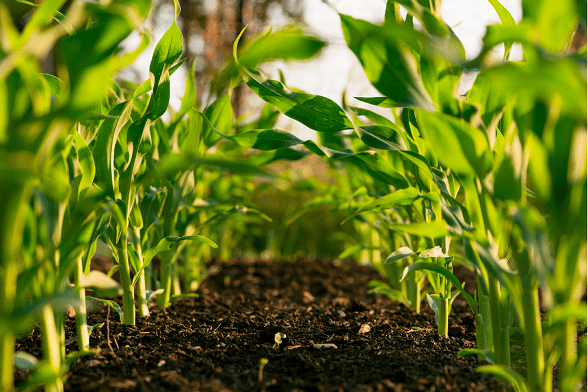
Even as international reports annually highlight the severity of global food insecurity, current efforts to safeguard our agricultural soil health remain inadequate. We face the imminent challenge of boosting food production by an estimated 60% by 2050. Crucially, we often fail to recognize the land the source of 95% of our global food supply as anything more than a finite resource. Achieving greater yields through sustainable soil management is not merely a statistical goal; it is a profound social imperative that demands collective action.
Soil Health: A Living Ecosystem
We must move beyond treating agricultural land simply as the topsoil where crops are cultivated. Soil is not just a rigid foundation for plants; it is a complex, living ecosystem teeming with earthworms and billions of microorganisms. These soil biota are vital, decomposing organic matter and boosting soil fertility. The fundamental truth is that optimal crop yields are unattainable without robust soil health. It is a regrettable oversight that we are allowing this vital, mother-like earth, which supplies plants with 15 essential nutrients, to deteriorate. Without genuinely healthy soils, the construction of sustainable food systems will forever remain an aspiration.
The Erosion of Soil Wealth:
While World Bank reports indicate that India’s arable land percentage is high at 51.8%, the shrinking per capita arable land due to rapid population growth is a growing concern. Our agriculture relies heavily on highly fertile alluvial soils. Yet, today, nutrient deficiencies particularly of nitrogen, phosphorus, and zinc are rampant across Indian soils. This issue stems primarily from the unbalanced use of chemical fertilizers by farmers and an excessive focus on short-term yield, leading to neglect that further compromises soil vitality. The sequential rise of issues like potassium deficiency (1990s) and sulfur deficiency (2000s) clearly illustrates the historical policy neglect toward soil health.
The Mounting Challenges:



As the National Academy of Agricultural Sciences highlights, the loss of 15.35 tonnes of nutrients per hectare annually is essentially the mortgaging of our future. Deforestation and unsystematic farming practices cause fertile topsoil to be eroded by wind and water. Furthermore, overgrazing and the impacts of climate change are driving desertification, stripping fertile land of its productivity. Dismissing this as merely a natural disaster is inaccurate; it is fundamentally a consequence of human mismanagement. A dangerous drop in soil organic carbon is eroding the very core vitality of our land. The indiscriminate application of chemical fertilizers and pesticides by farmers contaminates the soil and destabilizes its critical nutrient balance.
Moreover, excessive irrigation leads to soil salinity and alkalinity, making cultivation arduous. The poor quality of our water management is evident in waterlogged areas where poor drainage starves and kills plant roots. On the social front, the inability of small-holding farmers to access technology, their failure to conduct soil tests, and a general lack of awareness regarding practices like burning crop residues represent a collective societal failure.
A Roadmap for Future Sustainability:
Scientists caution that it takes millennia to produce just two or three centimeters of soil a sobering fact that demands introspection. To overcome these complex challenges, we must move beyond a sole reliance on technology and wholeheartedly embrace sustainable agricultural methods. We must launch a national movement for afforestation and the construction of bunds (embankments) to curb soil erosion. To mitigate the organic carbon deficit, crop residues must be incorporated into the soil instead of being burned. The use of organic manures, such as cattle dung and Jeevamrutham (a traditional organic preparation), should be aggressively promoted.
The government must mandate the use of Soil Health Cards and impose strict regulations requiring farmers to base fertilizer application solely on these recommendations, thereby correcting nutrient imbalances. To solve water management crises, water saving techniques like drip and sprinkler irrigation must be implemented nationwide on a war footing. Ultimately, change can only be sustained by organizing small farmers into unified groups and providing them with continuous, high quality training.
Soil Stewardship: A Shared Responsibility
The long-term success of our agricultural sector and the nation’s food security is entirely dependent on soil health. Our agricultural soil will remain fertile only when the government, scientists, farmers, and crucially, every citizen, collectively implement these technical and policy solutions. Quality soil is the indispensable foundation for healthy crops, nutritional security, and a robust, sustainable economy. Soil conservation is not merely the farmer’s job. It is an urgent, shared duty that all of us must undertake for the preservation of our collective future.