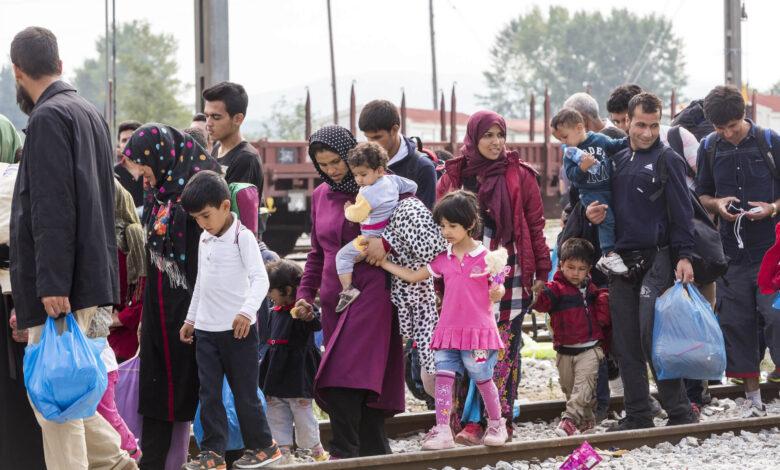
The International Migrants Day was proclaimed by the United Nations General Assembly in 2000. This day is celebrated every year on December 18. It raises awareness about the contributions of migrants to global economic growth, cultural diversity, and development, as well as the challenges faced by migrants, including discrimination and human rights violations. It promotes safe, orderly, and dignified migration for all. The 2025 observance is celebrated with the theme “My Great Story: Cultures and Development”. There are over 300 million international migrants worldwide. According to recent UN data, 304 million as of mid-2024, representing approximately 3.7% of the world’s population.
This number has nearly doubled since 1990. A significant portion of this includes women, children, and refugees. Refugees are fleeing from various pressures such as conflict and climate change. The United States hosts the largest number of international migrants (over 52 million in 2024) among individual countries, followed by Germany, Saudi Arabia, the United Kingdom, and France. Europe as a whole hosts the largest number of migrants by region. Migrants are significantly boosting global Gross Domestic Product (GDP), with their net contribution estimated at $4.35 trillion in 2020.
This is because migrants contribute a much larger share to GDP (approximately 9.4%) than their population share (3.3%). However, the statistics vary by country. They fill skills and labour gaps, drive innovation, and send remittances (money sent by migrant workers to their families back home). In 2023, remittances to low/middle-income countries exceeded $650 billion. In 2024, recorded remittances to low and middle-income countries were approximately $700 billion. Cross-border remittances are projected to exceed $700 billion annually in 2025. This is crucial for many national economies. Global GDP is projected to exceed $113 trillion by 2025.
Worldwide, migrants face numerous challenges, including unemployment, low wages, unsafe working conditions, and a lack of social security. Many also face discrimination, language barriers, and cultural exclusion in host countries. Undocumented migrants are particularly vulnerable to exploitation, human trafficking, and the denial of basic rights. Limited access to healthcare, education, and legal protection, along with isolation and separation from families, can lead to mental health problems. To address these challenges, governments must strengthen migrant-friendly policies and ensure equal labor rights.
International cooperation is needed to regulate safe and legal migration pathways. Providing healthcare, education, and housing improves the quality of life for migrants. Protecting migrants’ rights contributes to global development and social harmony. Countries considered safe for migrants often include Canada, New Zealand, Australia, Ireland, Iceland, Switzerland, Portugal, Denmark, and Singapore. Dangerous countries include Yemen, Sudan, South Sudan, Afghanistan, Syria, Ukraine, South Africa, and Venezuela. Some countries are adopting welcoming policies towards migrants.
Migrant Workers in India


The presence of 150 million migrant workers in India by 2025 will significantly impact the economy, varying across states due to job availability. Maharashtra leads with 20 million migrant workers, followed by Delhi with 15 million and Tamil Nadu with 10 million. These states house major urban centres like Mumbai, Delhi, and Chennai, which are abundant in job opportunities in construction, information technology, and service sectors. Conversely, regions like Lakshadweep (0.02 million) and Ladakh (0.05 million) have very few migrant workers. Delhi leads with 60% of its workforce being migrants, indicating that 6 out of every 10 workers are not locals.
Uttar Pradesh contributes 30 million workers, while Bihar contributes 25 million – these two states together account for more than one-third of the total migrant workforce. West Bengal (10 million) and Odisha (8 million) also contribute a significant number of workers, as their rural economies are unable to sustain the entire population. In contrast, states like Delhi (0.02 million emigrants) and Maharashtra (1 million) experience minimal worker emigration – they primarily serve as destinations rather than sources of migration. Migrant workers contribute 10% to India’s GDP. Migrants in Delhi contribute 15% to the local economy, those in Maharashtra 12%, and migrants in Gujarat 10%.
Like in other countries, migrant workers in India face multiple challenges, including low wages and job insecurity. Earnings are often 20-30% lower than those of local workers, and they have limited access to benefits such as health insurance. Many live in overcrowded conditions, especially in metropolitan cities like Mumbai and Delhi, where access to clean water and sanitation is inadequate. Lack of legal registration prevents migrants from accessing local welfare schemes such as food subsidies, while discrimination against workers from states like Bihar and Uttar Pradesh further limits their social and economic mobility.
In 2020, approximately 140 million migrant workers were affected by these issues, which were exacerbated during the COVID-19 lockdowns, leading to large-scale job losses and reverse migration to their hometowns. To address these problems, the government has introduced measures such as the Inter-State Migrant Workmen Act to ensure fair wages and safety, the One Nation One Ration Card scheme to enable access to food subsidies nationwide, the Pradhan Mantri Awas Yojana for housing support, and Skill India to improve employment opportunities. However, limited implementation and low coverage indicate the need for stronger enforcement and broader support for migrant workers, especially in low-wage sectors.
When supported by inclusive policies and protected rights, migration becomes a powerful tool for sustainable development and social progress. Recognizing migrants not as a burden but as partners in growth fosters mutual prosperity and global solidarity. A world that values and protects migrants builds a more just and inclusive future for all.