“Believe in yourself and your potential. You possess the power to transform society. Question injustice fearlessly and strive not for personal gain, but for the collective welfare of the community.” This clarion call was issued to the masses during the freedom struggle by a titan of the Indian independence movement.
During a brutal police crackdown, he famously declared: “Every blow aimed at me is a nail in the coffin of British imperialism.” He added with haunting foresight, “I do not know if I shall survive, but my spirit will continue to inspire you to make further sacrifices for our freedom.”
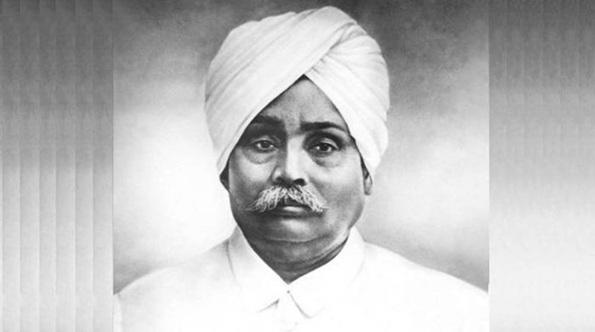
That man was Lala Lajpat Rai, a pivotal member of the legendary “Lal-Bal-Pal” triumvirate who breathed life into the extremist movement. His brand of nationalism was defined by an unflinching love for liberty, justice, and self-respect. As we mark his birth anniversary on January 28, revisiting his monumental service to the nation is the greatest tribute we can offer.
A Leader Forged in Youth:
Born on January 28, 1865, in the village of Dhudike, Punjab, to Radha Kishan and Gulab Devi, Rai inherited a unique blend of traits. From his father, he gained a sense of duty and uncompromising honesty; from his mother, he imbibed generosity and spiritual depth. Even as a student in Ludhiana in the early 1880s, despite frail health, he developed a passion for literacy and oratory, displaying leadership qualities that far exceeded his years.
The Intellectual Revolutionary:




Rai began his legal career in Hisar in 1886, where he co-founded the Hisar Bar Council and established the local chapter of the Arya Samaj. However, he soon pivoted to journalism as a tool for political mobilization, becoming a regular contributor to publications like The Tribune.
Recognizing education as a pillar of revolution, he assisted Mahatma Hansraj in founding the Dayanand Anglo-Vedic (DAV) School in Lahore. By 1905, the Congress Committee deputed him to England to brief the British public on Indian grievances. Alongside Gopal Krishna Gokhale, he used data-driven oratory to expose the colonial government’s excesses. He later traveled to the United States, studying educational models and successfully countering British propaganda against the Indian movement.
Architect of Social Welfare:
In 1920, Rai presided over the special session of the Indian National Congress in Calcutta. A year later, he founded the Servants of the People Society, a non-profit dedicated to social service. He was a staunch advocate for internal reform within Hindu society, fighting against untouchability and the rigid caste system. He believed the Vedas should be accessible to all, regardless of caste or gender.
Following the Jallianwala Bagh massacre, he led the Congress in adopting the Non-Cooperation resolution. Though imprisoned in 1921, his resolve remained unbroken. In 1926, he joined the Swaraj Party, serving as its deputy leader in the Central Legislative Assembly.
A Multifaceted Reformer:
Lala Lajpat Rai was a rare polymath—a politician, social worker, author, and philanthropist. During the famines of 1896 and 1899, and the 1905 earthquake, he was at the forefront of relief efforts. He built schools and orphanages for the marginalized, and worked closely with Mahatma Gandhi’s Harijan Sevak Sangh. As a writer, he immortalized the lives of revolutionaries like Mazzini, Garibaldi, and Shivaji, using their biographies to ignite the spark of patriotism in Indian youth.
The Martyrdom of the Punjab Kesari:
During the Swadeshi movement, his influence grew so formidable that the British labeled him a “dangerous revolutionary.” His fierce opposition to the Punjab Colonization Act led to his deportation to Mandalay in 1907.
The final chapter of his heroic life was written on October 30, 1928. While leading a non-violent protest against the Simon Commission in Lahore, he was brutally assaulted during a lathi charge ordered by Superintendent James A. Scott. Rai succumbed to his injuries on November 17, 1928. While his physical presence vanished, his martyrdom accelerated the downfall of the British Raj, cementing his status as the Punjab Kesari – “The Lion of Punjab.”