
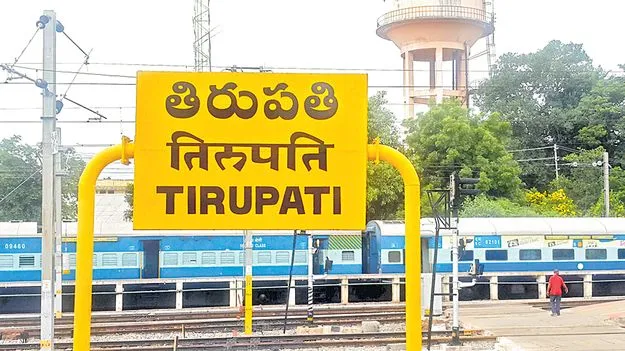
With the goal of accelerating the economic development of the Rayalaseema region, the government has already launched the Rayalaseema Horticulture Hub. Continuing in the same direction, the government has taken another significant step by initiating the establishment of the Tirupati Economic Region to support the region’s growth. In India, economic regions are geographically identified areas based on factors such as economic activities, availability of resources, industrial development, and growth potential. These regions help governments and planning agencies promote balanced economic development across the country. Economic regions play a vital role in reducing regional disparities, encouraging industrial growth, improving infrastructure, creating employment opportunities, attracting investments, ensuring the sustainable use of resources, and promoting the unique strengths of different areas. Through these measures, they contribute significantly to overall economic growth and balanced regional development. At present, different regions of India are known for their distinct economic strengths: The Northern Region is renowned for agriculture, manufacturing industries, and the services sector. The Western Region is recognized as India’s major industrial and financial hub. The Southern Region leads in information technology, electronics, and automobile industries. The Eastern Region is known for its mineral resources, coal, and steel production. The Central Region is important for mining, power generation, and agriculture. The Northeastern Region is developing based on agriculture, tourism, handicrafts, and natural resources. The establishment of the Tirupati Economic Region is expected to further strengthen Rayalaseema’s economic growth and contribute to the balanced development of Andhra Pradesh and the country as a whole.
Tirupati Economic Region Powers Rayalaseema’s Growth
The Government of Andhra Pradesh has divided the state into three major economic regions: Visakhapatnam, Amaravati, and Tirupati. Through this division, the government aims to achieve balanced regional development, attract investments, improve infrastructure, and create employment opportunities. The primary objective of the Tirupati Economic Region is to promote balanced development in the Rayalaseema and Nellore areas. This region comprises a total of nine districts: Tirupati, Nellore, Chittoor, Annamayya, Kadapa, Nandyal, Kurnool, Anantapur, and Sri Sathya Sai districts. Tirupati serves as the headquarters and growth center of this southern economic region. In 2026, state officials described Tirupati as a rapidly emerging economic, industrial, tourism, and spiritual hub. Supported by new industrial projects, educational institutions, and infrastructure investments, the region continues to experience significant growth.
The nine districts within this economic region host a diverse range of industries: Tirupati District is known for tourism, hospitality, electronics manufacturing, education, and healthcare services. Nellore District is renowned for aquaculture, seafood exports, thermal power generation, logistics, and manufacturing industries. Chittoor District has a strong base in dairy processing, food processing, textile industries, and automobile component manufacturing. Annamayya District focuses on agriculture, horticulture, food processing, and mineral-based industries. Kadapa and Nandyal Districts are important centers for cement manufacturing, limestone mining, and allied industries. In addition, Kadapa is witnessing growth in steel industries and solar energy projects. Kurnool District contributes to economic development through cement production, pharmaceutical industries, seed production, and renewable energy sectors. Anantapur District is recognized for automobile manufacturing, renewable energy production, textile industries, and agricultural product processing. Sri Sathya Sai District supports electronics manufacturing, wind and solar power generation, food processing, and textile industries. Revenue generated through tourism associated with the Tirumala Sri Venkateswara Temple further strengthens the region’s economy. Industrial production and export activities from the Sri City Industrial Area have become key drivers of regional development. Expanding renewable energy parks across the Rayalaseema region are also contributing significantly to economic growth. Improved road and railway connectivity is boosting trade and industrial activities, while the growing agriculture, horticulture, and food-processing sectors are creating employment opportunities and attracting new investments. Together, these developments are positioning the Tirupati Economic Region as an important engine of economic growth in Andhra Pradesh.
Key Industries and Economic Strengths of the Tirupati Economic Region
India’s economic regions face several challenges in achieving balanced development and sustained economic growth. Regional economic disparities remain significant across the country. While the western and southern regions contribute more than 60% of India’s Gross Domestic Product (GDP), the eastern, central, and northeastern regions account for less than 20%, highlighting substantial developmental imbalances. Inadequate infrastructure continues to be a major constraint. Due to deficiencies in transportation and logistics networks, logistics costs in India account for approximately 13–14% of GDP, which adversely affects economic efficiency and competitiveness. Unemployment and underemployment are more prevalent in less-developed regions, leading to large-scale migration of people to economically advanced cities and urban centres in search of better opportunities. The northeastern, eastern, and central regions of India remain heavily dependent on agriculture. However, climate change, unpredictable weather patterns, and low agricultural productivity pose significant challenges to their economic progress. Industrial investments are also concentrated in a limited number of states, resulting in uneven industrial development across the country. As a consequence, many regions struggle to attract industries, generate employment, and achieve higher levels of economic growth. Addressing these challenges through improved infrastructure, balanced investment policies, industrial diversification, skill development, and sustainable agricultural practices will be essential for ensuring more equitable and inclusive economic development across India’s regions.
Challenges Facing India’s Economic Regions
For India’s economic regions to develop successfully, governments must ensure balanced investments and increase spending on infrastructure, including roads, railways, ports, and digital connectivity. Expanding industrial corridors and Special Economic Zones (SEZs) can help attract investments to underdeveloped regions. Strengthening skill development programs and providing vocational training to workers can enhance employment opportunities. Supporting MSMEs, agriculture, and food-processing industries can further drive economic growth and job creation. Promoting renewable energy projects and region-specific development policies based on local resources can contribute to balanced regional development. Although these challenges are common across many regions, the Tirupati Economic Region has the potential to transform Rayalaseema into a competitive industrial, tourism, and renewable energy hub. It can play a crucial role in achieving balanced regional development in Andhra Pradesh and lay a strong foundation for the state’s long-term economic growth.
Read More :



Andhra Pradesh’s economic growth rate showing upward trend: CM
Dr. Manmohan Singh: The Architect of India’s Economic Reforms
India Infrastructure Growth Remains Strong Across Aviation, Railways, Roads and Telecom