2026 Nobel Prize in Chemistry Goes to Henri B. Kagan and Kenso Soai for Solving Century-Old Mystery

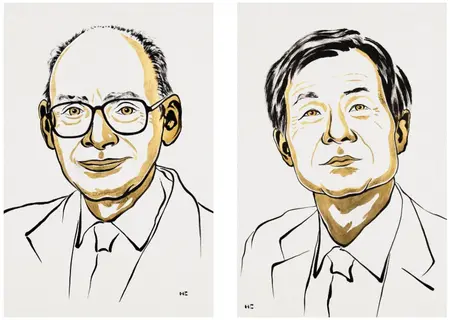
The Royal Swedish Academy of Sciences on Wednesday announced that it had awarded the 2026 Nobel Prize in Chemistry to Henri B. Kagan and Kenso Soai for their discovery of non-linear effects and autocatalysis in asymmetric organic synthesis.
Nobel Prize in Chemistry 2026: Kagan and Soai Solve a Century-Old Chemical Mystery
The Academy said the two scientists were honoured for the discovery of non-linear effects and autocatalysis in asymmetric organic synthesis, breakthroughs that solved a longstanding puzzle regarding the emergence of molecular asymmetry or homochirality in nature.
In addition, they have been awarded a cash prize of 12 million Swedish kronor, which was to be shared equally between the two winners.
What Is Homochirality? Why Is It a Century-Old Mystery?
Many molecules, including amino acids, exist in two mirror-image forms. While these variants are chemically similar, living organisms overwhelmingly use only one form.
For decades, scientists struggled to understand how such selectivity emerged naturally.
According to the Nobel Committee, chemists traditionally obtained equal amounts of both mirror-image molecules during laboratory synthesis.




Moreover, the discoveries by Kagan and Soai demonstrated how chemical reactions can be steered toward producing predominantly or even exclusively one mirror image.
Henri Kagan’s 1986 Breakthrough Paved the Way
“Henri Kagan and Kenso Soai have provided a solution to a chemical mystery that is over a century old: how homochirality can emerge spontaneously. The chemical reactions they have developed are spectacular,” said Heiner Linke, Chair of the Nobel Committee for Chemistry.
Kagan made the first major breakthrough in 1986 by developing a new method to influence chemical reactions, enabling the production of a much higher excess of one molecular mirror image than previously thought possible.
Building on that foundation, Soai demonstrated in 1995 a groundbreaking chemical reaction with the potential to become homochiral.
In 2003, he achieved a landmark result by presenting a reaction that produced only one of the two possible mirror-image forms, a feat previously seen only in biological systems.
Why the 2026 Chemistry Nobel Matters for Medicine
The Academy noted that the laureates’ discoveries have had a profound impact on modern chemistry, particularly in the design and manufacture of pharmaceuticals, where producing the correct molecular mirror image is often critical for therapeutic effectiveness.
Kagan who was born in 1930 in Boulogne-Billancourt, France earned his PhD from the Collège de France in 1960 and is Professor Emeritus at the former Université Paris-Sud.
On the other hand, Soai was born in 1950 in Hiroshima, Japan and received his PhD from the University of Tokyo in 1979 and is Professor Emeritus at Tokyo University of Science.
Read More:
US, Japanese scientists awarded 2025 Nobel Prize for Medicine for discovery on immune system