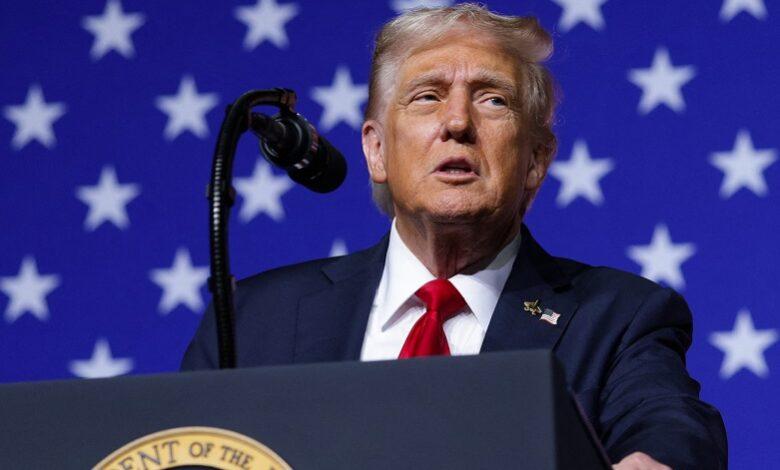
The Nobel Peace Prize aims to recognize individuals or groups that have made significant contributions to peace, diplomacy, or resolving conflicts. The president of the United States anticipated receiving the Nobel Peace Prize this year (2025). However, “Maria Corina Machado” received the award for her relentless efforts in advocating for the democratic rights of the Venezuelan populace. US President Donald Trump strongly feels that he is entitled to it for his attempts to prevent conflicts among various nations. However, he overlooks the fact that he has shattered global economic harmony through international trade tariffs. Donald Trump’s policies, particularly his “America First” approach, have resulted in several harmful impacts on the worldwide economy.
Particularly amid the US-China trade war, his assertive application of tariffs has harmed global supply chains, heightened uncertainty in international markets, and decelerated global trade expansion. These protective actions have harmed the multilateral trading system. Relationships with longstanding allies have also faced difficulties. Trump’s exit from significant international accords like the Trans-Pacific Partnership (TPP) and the Paris Climate Agreement has diminished global collaboration on trade and environmental matters.
Moreover, his erratic foreign policy and statements have resulted in instability within financial markets. It has diminished confidence in American leadership, leading to a more divided and unstable global economy. Although his strategy regarding the Iran nuclear agreement and North Korea has been groundbreaking, it has not succeeded in promoting enduring disarmament and peace. The departure of his administration from international bodies like the World Health Organization (WHO) has diminished worldwide initiatives to tackle shared issues like the COVID-19 pandemic and climate change.
The International Monetary Fund (IMF) and various economic analysts project that trade disputes and tariffs enacted during his tenure have decreased worldwide gross domestic product (GDP) by approximately $300 billion to $450 billion by 2020. The United States is believed to have suffered $1.7 trillion in stock market fluctuations due to uncertainties in trade policy, while global trade has decelerated, resulting in billions in diminished exports to nations dependent on open markets. Key economies like the European Union (EU), China, and developing markets have experienced reduced investment and manufacturing production due to disruptions in global supply chains.
In general, the economic harm caused by Trump’s protectionist measures has resulted in economic strain not just for the United States but for the entire interconnected world economy. Major U.S. allies Japan and South Korea are under pressure to boost military expenditure and rethink trade deals, with South Korea reportedly losing over $1.4 billion in yearly export revenues. Countries like India in emerging markets have encountered increased tariffs on vital exports, with global economic growth anticipated to decelerate notably in 2024 and 2025 as a result of US policies during Donald Trump’s administration.
The Organisation for Economic Co-operation and Development (OECD) anticipates that worldwide gross domestic product (GDP) growth will decrease from 3.3% in 2024 to 2.9% in 2025, whereas the International Monetary Fund (IMF) has revised its 2025 prediction down to 2.8%. With global GDP at approximately $100 trillion, even a slight drop of 0.3–0.5 percentage points would equate to hundreds of billions of dollars in revenue loss.


However, there are several claims that Donald Trump is worthy of the Nobel Peace Prize. There are opposing views that Trump facilitated normalization deals between Israel and multiple Arab nations (UAE, Bahrain, Morocco, Sudan), lessened regional conflicts, and engaged with North Korea’s leader to momentarily ease nuclear tensions and initiate discussions. During his term, Trump has initiated no new wars. He has managed the withdrawal of troops from Afghanistan, Iraq, and Syria. Some contend that his disruptive diplomacy might open doors for halted international peace deals. Certain global leaders and politicians have put forth his name for nomination, with claims that his peace initiatives have proven successful in certain areas, curbing unintended hostilities and averting further conflict.
Critics argue that Trump’s policies have exacerbated inequality both domestically and internationally. His tax strategies have increased economic disparities, which have indirectly sparked social unrest in various areas. Throughout his presidency, extensive protests have occurred in the United States, especially concerning racial justice, police violence, and political discord. His replies have frequently faced criticism for escalating tensions instead of calming them.
A peace prize must not be given for transactional diplomacy that overlooks long-term effects for immediate rewards. Numerous decisions in his foreign policy have been devoid of clarity and honesty. The immigration policies of his administration, especially family separations at the US-Mexico border, and violations of human rights have received global condemnation. Thus, granting the Nobel Peace Prize to Donald Trump would be very contentious and would contradict the essence of the award.