
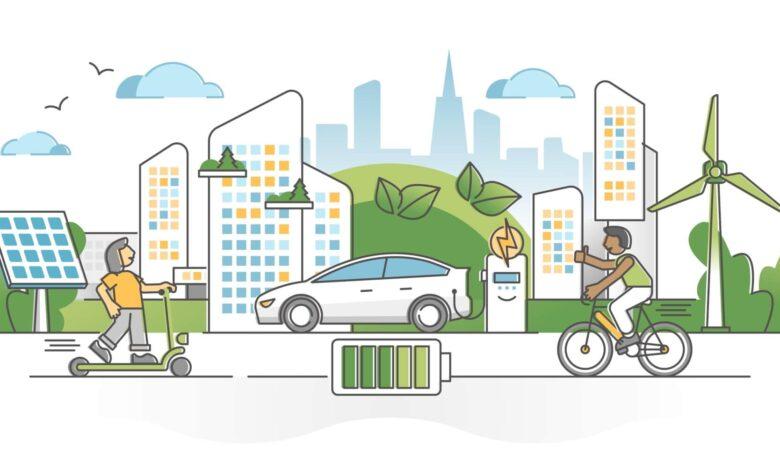
Sustainable cities and societies are the 11th goal of the United Nations Sustainable Development Goals. Countries around the world are still lagging behind in achieving this goal. Environmentally friendly transport is crucial to achieving this goal. Green transport refers to the use of transport systems and methods that reduce the environmental impact by reducing greenhouse gas emissions, energy consumption and pollution. It emphasizes the use of cleaner technologies, renewable energy, efficient infrastructure and behavioral changes that promote sustainability. The importance of green transport in sustainable development lies in its ability to balance economic growth with environmental protection and social well-being.
Green transport reduces dependence on fossil fuels, reduces climate change, improves air quality and enhances public health. In addition, it encourages the use of environmentally friendly modes of transport such as cycling, walking, and public transport, which reduce traffic congestion and noise in urban areas. Sustainable road transport can be achieved through electric vehicles (EVs), carpooling (sharing a car with several people to reduce travel costs, save fuel, and reduce traffic congestion), biofuels, and improved public transport systems.
Green transport supports sustainable urban planning, reduces resource depletion, and enhances long-term resilience against environmental challenges. Ultimately, it plays a key role in achieving the global Sustainable Development Goals by creating cleaner, more efficient transport systems for future generations. Furthermore, it helps cities meet the global emission reduction targets under the Paris Agreement.
Many countries around the world are taking the lead in promoting environmentally friendly transport to combat pollution and support sustainable development. Norway is in first place, where almost 90% of new passenger cars sold in 2024 will be fully electric, making it a world leader in electric mobility. Sweden is in second place, with almost 60% of its vehicles running on biofuels. The Netherlands, known for its extensive cycling infrastructure and 100% renewable-powered electric trains, with strong investment in green public transport since 2017, is in third place. Denmark, with a focus on cycling, electric buses and low-emission zones, is in fourth place with an Environmental Performance Index (EPI) score of 68.
Finland, in fifth place, ensures sustainable mobility through efficient public transport and low carbon emissions. Germany, with heavy investment in hydrogen-powered trains and electric vehicle infrastructure, is in sixth place. Switzerland, ranked seventh, operates one of the most efficient public transport networks, mostly powered by renewable energy. France, ranked eighth, is leading the way in the deployment of electric buses and high-speed trains to reduce air travel emissions. Japan, ranked ninth, is encouraging electric and hybrid vehicles with strict emission regulations. Canada, which promotes green commuting and electric vehicles, completes the top ten.
India’s transport sector is gradually shifting towards eco-friendly transport. For example, the country has targeted widespread electrification of public transport and electric vehicle charging infrastructure. However, this transition is uneven across states, with some states moving ahead faster than others. Among the top states with good eco-friendly transport, Delhi leads in electric vehicle penetration (2022-23) with nearly 11.5% of vehicles being electric vehicles. Kerala, ranked second with nearly 11.1% of electric vehicles, is driven by strong use of incentives. Karnataka is ranked third with 9.9% electric vehicles and the largest public charging station network among the states. Maharashtra, which is ranked fourth, sold 2,104 electric commercial vehicles in 2024-25, which is 24% of the national total of 8,746 electric vehicles. Odisha is ranked 5th in India with 450 electric-buses. These states are contributing to the goals of creating more low-carbon systems.




The role of artificial intelligence in achieving green transportation
The role of artificial intelligence (AI) Artificial intelligence (AI) plays a key role in making the future of transportation clean and efficient. Artificial intelligence enables smart traffic management systems that reduce congestion and fuel waste by effectively managing traffic flow, public and freight traffic, and signal timing. In electric vehicles (EVs), AI improves battery performance, charging efficiency, and predictive maintenance. AI also helps in analyzing big data to design sustainable transportation policies and monitor pollution levels. Through smart public transport scheduling, it ensures energy-efficient operations. It helps urban planners create green mobility networks by simulating traffic and environmental impacts. AI-powered logistics systems make supply chains more sustainable. Overall, it accelerates the transition towards intelligent, low-carbon, and environmentally friendly transportation systems around the world.
Achieving green mobility around the world requires a combination of technological innovation, policy support, and behavioral change. Governments should promote electric and hybrid vehicles by providing subsidies and expanding charging infrastructure. Promoting public transport over private car use can reduce fuel consumption and congestion. The development of cycling lanes and pedestrian-friendly infrastructure can shift short-distance travel towards zero-emission modes. Investing in renewable energy sources to power systems such as solar and wind can further reduce carbon footprints.
The use of biofuels and hydrogen fuel cells can make aviation, shipping, and heavy transport more sustainable. Introducing stricter vehicle emission standards in cities can curb air pollution. Improving urban planning to integrate housing and transport systems can reduce travel distances. Promoting carpooling and ride-sharing platforms can reduce the number of vehicles on the roads. Governments and industry should collaborate to research cleaner technologies and promote green logistics for freight transport. Public awareness campaigns are crucial to motivate citizens towards environmentally friendly travel options. Finally, international cooperation and adherence to climate agreements can ensure global progress towards low-carbon mobility and make transport clean, healthy and sustainable for future generations.
Read More:
Andhra Pradesh E Mobility cities notified to boost green transport
India Electric Mobility Index to boost EV adoption across states: NITI Aayog