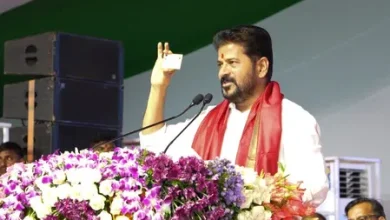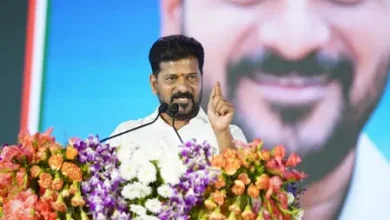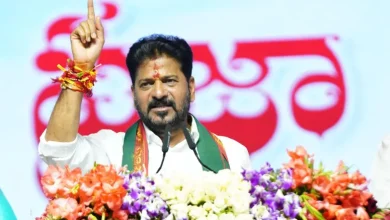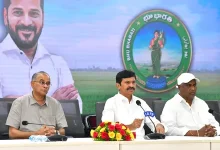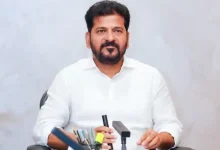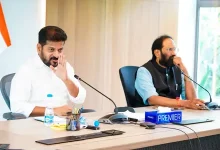
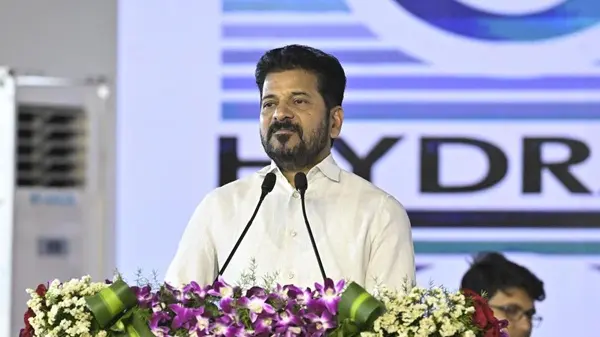
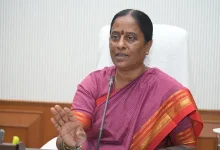
Telangana Chief Minister A. Revanth Reddy on Monday proposed a “Hybrid Model” for the delimitation of parliamentary constituencies. The Hybrid Delimitation Model proposed by Revanth Reddy is being seen as a balanced approach to the delimitation of constituencies.
Hybrid Delimitation Model for Lok Sabha seats allocation
He suggested that of the 272 Lok Sabha seats proposed to be added, 136 should be allocated on a pro rata basis, and the remaining 136 should be allocated based on Gross State Domestic Product. This Hybrid Delimitation Model combines population and economic contribution for Lok Sabha seats allocation.
Addressing a press conference, he warned that the Centre’s delimitation plan could widen the North-South divide.
Stating that delimitation on the basis of population would weaken the Southern states, he said priority must be given to those states that contribute the largest share to the nation’s gross output.
He asked, “We, the states of Southern India, are the ones generating revenue and creating employment and livelihood opportunities for the nation. Then, how can you penalise us?”
Hybrid Delimitation Model and need for consensus
Revanth Reddy said the Centre should consult all stakeholders, including political parties, before finalising the delimitation process.

He demanded an all-party meeting to discuss delimitation, adding that the issue must be debated in Parliament and a committee comprising experts should be constituted.
He said a decision should be reached after debate in all State Legislative Assemblies and, subsequently, secured approval in Parliament.
Stating that this process could be completed by March 2028, he cautioned against haste, warning it risked widening the divide between Southern and Northern regions.
He announced that he would try to build consensus among the Southern states and smaller states on this issue. The Hybrid Delimitation Model is being positioned as a way to address Southern states representation concerns.
“I will write letters regarding this matter to all the Southern states, as well as to smaller states like Delhi and Punjab,” he said.
Hybrid Delimitation Model vs population-based delimitation
He alleged that there is a political conspiracy behind linking women’s reservations with the delimitation of constituencies. He said if a bill for women’s reservations is introduced based on the 2026 census, the Congress party will extend its full support.
The Chief Minister alleged that PM Modi is dangerously utilising the delimitation of constituencies as a political tool. He said the population in the Southern states has declined due to rigorous implementation of family planning measures, while in the Northern states it has surged significantly due to ineffective implementation.
He pointed out that Southern states have protested the proposal to reallocate seats based on population and have written a letter to the Prime Minister regarding this matter.
He explained that Kerala currently has 20 seats and Uttar Pradesh has 80, a disparity of 60 seats. If a 50 per cent increase is implemented, this gap would widen to 90 seats. The disparity between Telangana and Uttar Pradesh would widen to 94 seats.
The Southern states collectively hold 130 seats; if increased by 50 per cent, this total would rise to 195 seats. The Northern states currently hold 413 seats; if increased, this total would rise to 621 seats. Consequently, the disparity in seats between Southern and Northern regions would widen from 412 to 620 seats, he added.
He claimed that efforts were underway to politically relegate certain states to secondary status. “Even smaller states will face significant challenges; states like Delhi and Punjab risk losing their political relevance,” he said.
He warned that enhancing the seats by 50 per cent would deal an irreparable blow to the Southern states, as well as to smaller states. The Hybrid Delimitation Model is presented as an alternative to population-based delimitation to avoid widening disparities.
Hybrid Delimitation Model and women’s reservation debate
He alleged that the Centre is mixing women’s reservations with constituency delimitation, thereby propagating the narrative that opposition parties are failing to cooperate in implementing women’s reservations.
He said, “These two issues are entirely unrelated to one another. I propose that these two matters be delinked, discussed separately, and that specific modalities regarding their implementation be evolved.”
Stating that the Congress party is committed to women’s reservation, he said the Congress does not need to learn anything from the BJP, which has never appointed a single woman as party president or general secretary in the last 46 years.
He recalled that a law was enacted stipulating that women’s reservations would be implemented only after the census to be conducted post-2026.
He said, “Had a 33 per cent reservation been provided for the 2024 Lok Sabha elections, there would have been an opportunity for 181 women to be elected out of the 543 seats. By failing to implement the law immediately upon its passage in the Lok Sabha—and instead attaching conditions to it—women have been deprived of their reservations.”
If the provisions are amended in accordance with the 2026 census, women’s reservations could be implemented in the 2029 Lok Sabha elections, as well as in the assembly elections of various states, the Chief Minister added.
Read More:
Delimitation is going to be limitation for the South: Telangana CM
Telangana Assembly resolution opposes delimitation based on population, seeks transparency