
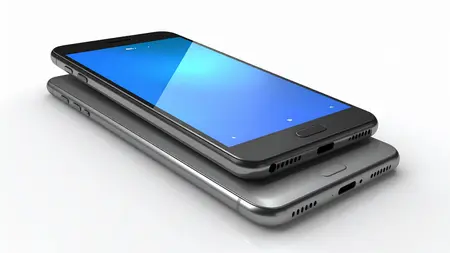
The Centre has rolled out customs duty relief on electronic components to reduce the cost of importing critical inputs and capital goods used in manufacturing smartphones, display assemblies and lithium-ion batteries. The customs duty relief on electronic components is aimed at boosting electronics manufacturing in India, improving cost competitiveness and encouraging greater domestic value addition.
The Central Board of Indirect Taxes and Customs (CBIC) has issued three separate notifications to roll out the customs duty waiver and expand the list of goods eligible for concessional duty.
Customs duty relief on electronic components expanded till 2029
The government’s has issued a notification exempting five components used in manufacturing display assemblies for automotive, medical and industrial applications from basic customs duty until March 31, 2029. These include cells, flexible printed circuit assemblies (FPCAs), backlight units, frames and anisotropic conductive film (ACF).
The exemption, however, does not cover display assemblies for mobile phones, smartwatches, smart meters, television panels and interactive flat-panel displays.
Wireless charging components also get customs duty exemption
A separate notification has been issued to extended zero customs duty until March 31, 2029, on six components used in manufacturing inductor coil modules for wireless charging in cellular mobile phones. These include nano-crystalline assemblies, E-shields, PET liners, PC shims, stranded and NFC coils, and neodymium-iron-boron (NdFeB) magnets.
Lithium-ion battery manufacturing gets major customs duty support
The third CBIC notification has been issued for replacing the existing list of machinery eligible for concessional customs duty for lithium-ion cell manufacturing with an expanded list of 85 capital goods.



The revised list includes coating machines, winding machines, welding systems, testing equipment, formation machines, drying systems and other specialised manufacturing equipment used across the lithium-ion cell production process. The move aims to improve cost competitiveness and support domestic value addition in electronics and electric vehicles.
Government aims to strengthen electronics and EV supply chains
The duty waivers and concessions, which are valid until March 31, 2029, aim to reduce the import cost of critical components and capital goods, which will improve cost competitiveness, encourage greater domestic value addition. This reinforces the government’s broader strategy of building domestic capabilities in advanced electronics, battery manufacturing and electric mobility supply chains.
Read More:
Electronics manufacturing becomes 3rd-largest goods export category from India: Minister
Record Defence Exports Reflect Global Confidence in Make in India Platforms Says Rajnath Singh