Tata Steel 40 MTPA Expansion Plan Gains Momentum as N. Chandrasekaran Eyes Next Growth Phase

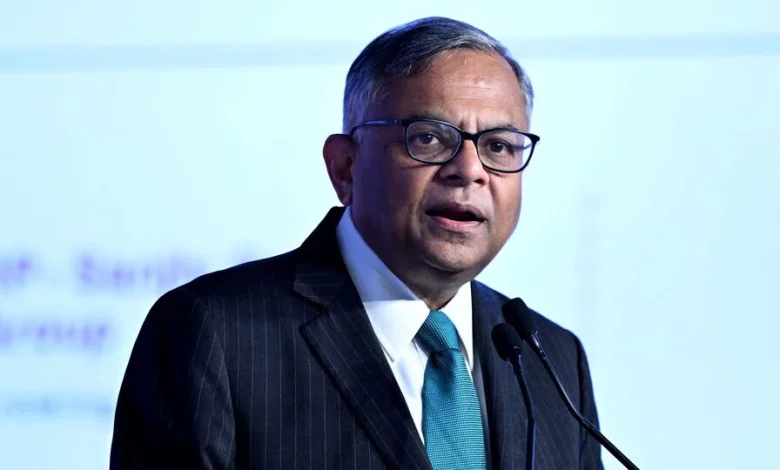
Tata Steel 40 MTPA expansion plan is gathering pace, with Chairman N. Chandrasekaran announcing that the company has already begun planning its next growth phase after increasing its steelmaking capacity to 26.1 million tonnes per annum (MTPA). The announcement underscores Tata Steel’s long-term strategy to strengthen its position as one of India’s leading steel producers.
Addressing shareholders during the company’s 119th Annual General Meeting (AGM), Chandrasekaran said the commissioning of Phase II of the Kalinganagar plant marked a significant milestone in the company’s expansion journey.
Tata Steel Moves Closer to 40 MTPA Capacity Target
Chandrasekaran described the completion of the Kalinganagar expansion as “a decisive step” toward achieving Tata Steel’s long-term goal of 40 MTPA steelmaking capacity.
He added that the company has already started evaluating new locations and land acquisitions to support future growth beyond the 40 MTPA milestone.
The expansion is expected to strengthen Tata Steel’s manufacturing footprint and support India’s growing infrastructure and industrial demand.
Kalinganagar Expansion Boosts Steel Production
The commissioning of Phase II at the Kalinganagar plant has increased Tata Steel’s total production capacity to 26.1 MTPA.


The project represents one of the company’s biggest capacity additions and reinforces its long-term investment strategy in India’s steel sector.
Tata Steel Focuses on AI and Digital Transformation
Highlighting the company’s digital journey, Chandrasekaran said Tata Steel has deployed more than 860 Artificial Intelligence (AI) models across its operations to improve efficiency and productivity.
Its digital platforms Aashiyana and DigECA recorded a combined gross merchandise value (GMV) of Rs 9,360 crore in FY26, registering a 161% year-on-year growth.
The increased use of AI reflects Tata Steel’s focus on smart manufacturing and technology-led operational excellence.
Europe Operations Face Regulatory Challenges
Speaking about the company’s European business, Chandrasekaran said restructuring efforts are yielding positive results.
However, he noted that operations in the Netherlands have become more challenging due to environmental regulations that exceed European Union standards.
The company is engaging with the Dutch government and stakeholders to develop a solution that is environmentally compliant, financially viable, and sustainable over the long term.
Read More:
Tata Group chairman calls Air India plane crash ‘one of the darkest days’ in company’s history
‘India Steel 2025’ to deliver roadmap on capitalising international market