Venezuela Earthquake Exposes Years of Crisis as Rare Double Quake Leaves Massive Destruction

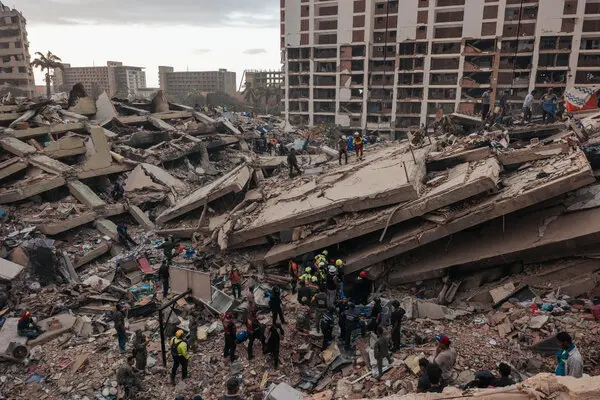
Venezuela Earthquake do not kill indiscriminately; vulnerability does. When powerful tremors struck Venezuela, they exposed far more than shifting tectonic plates. They revealed the devastating consequences of economic collapse, ageing infrastructure, and inadequate earthquake preparedness. What unfolded was not merely a natural disaster, but a humanitarian catastrophe decades in the making.
Years of economic decline, political turmoil, international sanctions, and deteriorating public infrastructure had already pushed the South American nation to the brink. The Venezuela earthquake has now compounded that crisis, leaving thousands of buildings in ruins, claiming hundreds of lives, and trapping countless others beneath collapsed structures. Rescue teams continue to race against time, while fears remain that the death toll could rise significantly.
This is not merely another story of nature’s destructive power. It is also a stark reminder of how weak institutions, neglected infrastructure, and prolonged economic distress can transform a natural hazard into a humanitarian catastrophe.
Why the Venezuela Earthquake Caused Such Massive Destruction
The disaster stands out not only because of its scale but also because of its unusual geological nature. Seismologists describe the event as a seismic doublet, a rare phenomenon in which two major earthquakes of nearly comparable magnitude occur within seconds or minutes of each other.
Ordinarily, a major earthquake is followed by weaker aftershocks. However, the second powerful tremor struck before already damaged buildings had any chance to withstand additional stress. Structures weakened by the first quake simply collapsed during the second, dramatically amplifying the destruction.
Venezuela lies along the boundary between the Caribbean Plate and the South American Plate. The country’s Boconó Fault has long been recognised as one of its principal seismic zones.

Scientists say the earthquakes originated at shallow depths, allowing much of their energy to reach the surface. They also point to structural resonance, where seismic waves match a building’s natural vibration frequency, significantly increasing the risk of collapse. Many ageing buildings lacked modern earthquake-resistant engineering standards, making them especially vulnerable.
How Economic Crisis Worsened the Venezuela Earthquake Impact
Earthquakes are not unfamiliar to Venezuela. The devastating 1812 Venezuela earthquake claimed thousands of lives, while the 1967 Caracas earthquake caused widespread destruction.
Yet decades of economic hardship have severely limited investment in earthquake-resistant infrastructure, retrofitting older buildings, and disaster preparedness. Urban planning has often failed to adequately address seismic risks.
The timing could scarcely have been worse. Venezuela continues to grapple with hyperinflation, shrinking public finances, and a prolonged decline in its oil industry.
Power outages and communication failures further complicated rescue efforts. Shortages of heavy machinery, specialised rescue equipment, and trained personnel slowed operations during the crucial first 72 hours. In many communities, residents dug through rubble with their bare hands in desperate attempts to rescue survivors.
International aid agencies warn that rapid humanitarian assistance remains critical during the immediate aftermath of major earthquakes.
Rebuilding Venezuela After the Earthquake
The United Nations, the International Red Cross, and several governments have begun mobilising relief efforts. However, the scale of destruction means Venezuela will require sustained international support well beyond emergency relief.
Reconstruction cannot simply involve replacing collapsed buildings. It must include:
- Modern earthquake-resistant building codes
- Retrofitting ageing infrastructure
- Expanded seismic monitoring systems
- Improved emergency response capabilities
- Greater public awareness and disaster preparedness
Equally important is long-term international cooperation to restore healthcare systems, rebuild infrastructure, revive the economy, and strengthen resilience against future disasters.
The Venezuelan tragedy demonstrates that natural disasters become far deadlier when they intersect with fragile governance, inadequate infrastructure, and prolonged economic decline.
Nature’s warnings cannot be ignored indefinitely. When preparedness fails, it is human lives that ultimately pay the price.
Read More :
Venezuela eyes cooperation in critical minerals, attract Indian investment: Govt