
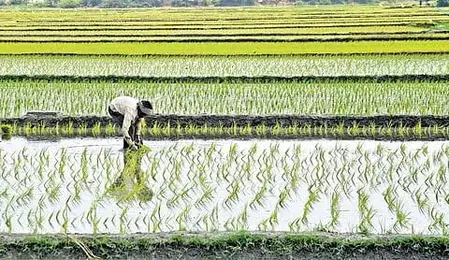
PM-AASHA has emerged as a structured mechanism for agricultural procurement, price stabilisation and market intervention aimed at ensuring better price realisation for farmers, reducing distress sales and promoting a stable and resilient agricultural economy, an official factsheet said on Friday.
PM-AASHA expands procurement and digital reforms
The programme has enabled timely purchase of pulses, oilseeds and copra through agencies such as NAFED (National Agricultural Cooperative Marketing Federation of India) and NCCF (National Cooperative Consumers’ Federation of India).
It has established additional procurement centres to strengthen market access and led to collective empowerment of farmers, the statement said.
PM-AASHA is the government’s flagship price support framework which along with digital reforms and infrastructure support have improved transparency, efficiency and reach of procurement operations across states.
Digital reforms, including Aadhaar-enabled authentication, e-NAM, e-Samriddhi, and e-Samyukti, have improved transparency and procurement efficiency. Support from the Agriculture Infrastructure Fund and expanded procurement coverage have further strengthened the scheme.
PM-AASHA budget rises to Rs 7,200 crore
The budget allocation for PM-AASHA has steadily increased over the years. In 2024–25, the actual expenditure under the scheme was Rs 5437.99 crore. The budget increased to Rs 6,941.36 crore in 2025–26 and was further raised to Rs 7,200.00 crore in 2026-27. This reflects the government’s focus on ensuring income support for farmers and strengthening price assurance mechanisms.




MSP margins offer farmers price support
Paddy (common) cultivation incurred a cost of Rs 1,627 per quintal in 2026–27, while its MSP was Rs 2,441 per quintal, yielding a margin of Rs 814. Soybean (yellow) cultivation cost Rs 3,805 per quintal, while its MSP was Rs 5,708 per quintal, yielding a margin of Rs 1,903.
Wheat had a production cost of Rs 1,239 per quintal and an MSP of Rs 2,585 per quintal in 2026–27, ensuring a Rs 1,346 margin. Meanwhile, jute has a production cost of Rs 3,662 per quintal and an MSP of Rs 5,925 per quintal, providing the highest margin of Rs 2,293.
Read More:
Farmers look to Budget 2026-27 for relief and guarantees