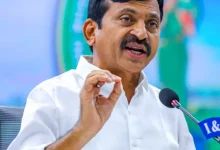
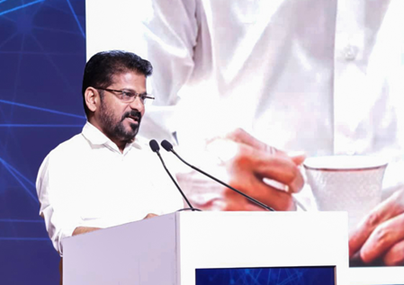
Telangana Chief Minister, A. Revanth Reddy, on Wednesday clarified that there was intervention by the government in the Moinabad farmhouse drugs case. He stated that Telugu Desam Party (TDP) Eluru MP, Putta Mahesh Kumar, was granted station bail in accordance with the rules.
The Moinabad farmhouse drugs case has triggered political debate in Telangana, with investigations focusing on alleged drug use by public representatives.
Key Highlights: Moinabad Farmhouse Drugs Case
- CM Revanth Reddy denies govt intervention
- SIT formed to probe drugs case
- TDP MP Putta Mahesh Kumar among accused
- 11 people arrested in farmhouse raid
- Political developments discussed in Delhi
SIT probe ordered in Moinabad farmhouse drugs case
During an informal chat with mediapersons in Delhi, he was asked if he intervened for the TDP MP’s release on bail.
He also stated that a Special Investigation Team (SIT) has been constituted to probe the case.
The Telangana DGP on Tuesday constituted a nine-member SIT to probe the case in which TDP MP Putta Mahesh Kumar, former BRS MLA Pilot Rohith Reddy and some others were arrested for allegedly consuming drugs.
The Elite Action Group for Drug Law Enforcement (EAGLE) Force in coordination with the police had conducted a raid at a farmhouse belonging to BRS’ Rohith Reddy at Moinabad near Hyderabad on the night of March 14.
As many as 11 people, including a woman who were present there, were arrested and six of them including Rohith Reddy and Putta Mahesh tested positive for drugs.
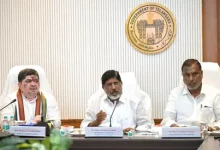
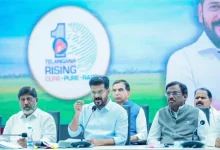
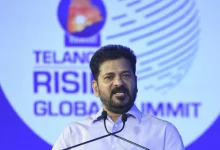
Bail granted to Putta Mahesh Kumar and others
Putta Mahesh, the MP from Eluru in Andhra Pradesh and seven other accused were released on station bail the next day.
Rohith Reddy, his brother Ritesh Reddy and Delhi-based businessman Namith Sharma were produced before a court, which remanded the accused to judicial custody.
In reply to another question by the media, the Chief Minister predicted that the next Assembly elections in Telangana will be held in 2029 and not in 2028.
He favoured early implementation of women reservations in Parliament and the state legislature.
Earlier, the Chief Minister accompanied by state Congress chief, Mahesh Kumar Goud, and party MPs met Congress leaders Rahul Gandhi and Priyanka Gandhi at Parliament.
Meetings with Congress leadership in Delhi
Revanth Reddy introduced his close friend Vem Narender Reddy, who was recently elected to the Rajya Sabha, to Rahul Gandhi and Priyanka Gandhi.
The Chief Minister and TPCC president also met AICC president Mallikarjun Kharge on Tuesday night.
Kharge congratulated Narender Reddy after Revanth Reddy introduced him to the AICC chief.
The Chief Minister and TPCC president also discussed political developments with Kharge.
Earlier, they also had a meeting with AICC general secretary K.C. Venugopal.
Read more articles:
Drugs haul: Ganja smuggling cases more than double in last one year in AP
Andhra: DRI busts Alprazolam factory, seizes drugs worth Rs 47 crore