“It was a friendship that got strengthened by trying to pick vegetarian fare at the hostel cafeteria,” smiles R. Aravamudan, recalling fond memories of his friendship with former President of India, Dr. A.P.J. Abdul Kalam.
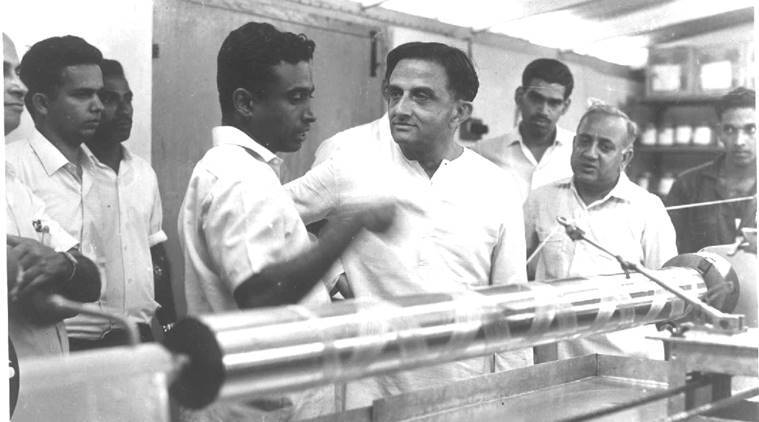
“We met in 1963 at the National Aeronautics Space Agency (NASA), Wallops Island launching facility in Virginia, United States. I was already there in the US and Kalam had left his job at the Defence Research laboratory in India and joined us,” continues the pioneer in space technology who was also among the first few that Dr Vikram Sarabhai recruited for the nascent Indian Space programme in 1962.
The initial crew, including Aravamudan and Kalam, was sent to NASA to be trained in space technology.
Dr. Vikram Sarabhai floated the idea of a space program when rocketry and space technology was unknown in India. “I was in a comfortable and prestigious central government scientific position in the Department of Atomic Energy,” informs Aravamudan. Despite the friendly warnings from friends about leaving a prestigious job for something still in its nascent stage, Aravamudan accepted.
The scope of the programme defined at that time was quite modest; namely setting up of a sounding rocket-launching facility near Trivandrum to help scientists from all over the world conduct ionospheric rocket soundings because of the presence of the geomagnetic equator.
While the initial scope was modest, ISRO scaled up its ambitions to launch satellites to make India self-sufficient in critical communication and remote-sensing abilities. It was important given the vast geographic features and challenges of India.

The crucial part of creating a satellite network is the ability to launch and place satellites in orbit. It was upon ISRO to develop and deliver that platform.
The Indian crew at NASA returned to India and attempted to build India’s first indigenous Satellite Launch Vehicle (SLV). And the challenges were many.
“We were a group of rookies and had very little practical knowledge of the complexities of developing the various elements of an SLV. Raw material and electronic components were not available in India and had to be imported amidst various restrictions and embargoes of other countries,” says Aravamudan.
Everything had to work perfectly since rocket technology was extremely unforgiving of flaws, and there is no second chance. Several hundred subsystems have to perform precisely to result in a successful mission.
The first launch, scheduled for August 1979, was an event that the whole world was looking at with a mix of anticipation and scepticism.
They were instead seen as a group of upstarts, trying to reinvent the wheel. However, the organisation and the government stood in solidarity with the engineers and scientists.
With all the dedicated efforts, the first attempt at launch was a failure, and the SLV lost control, plummeting into the Bay of Bengal. It earned the infamous moniker “Sea Loving Vehicle”.
Not ones to give up so quickly, the team regrouped and on 18 July 1980, almost a year after the failed launch, they had scheduled the launch of the SLV-3.
It had the capability of carrying a 40 kg payload. The SLV-3 successfully placed Rohini I in orbit. Dr Dhawan had permitted Doordarshan to telecast the launch. This time, the team delivered a perfect launch telecast live to the nation.
With the launch of the satellite, India had become the sixth member of the super exclusive club of space-faring nations, and the membership remains at six till date.
Coming back to the topic of his friendship with Kalam, Aravamudan speaks about how the Missile Man of India would often visit their home as he enjoyed eating traditional Iyengar food. He says, “Kalam always took himself very seriously and was earnest about whatever he did. He would throw himself completely into a project and motivated others to work as hard as he did.”
This was the beginning of a wonderful journey for space research in India, and to be able to hear these stories first-hand from someone who was at the centre of it all was indeed an experience.