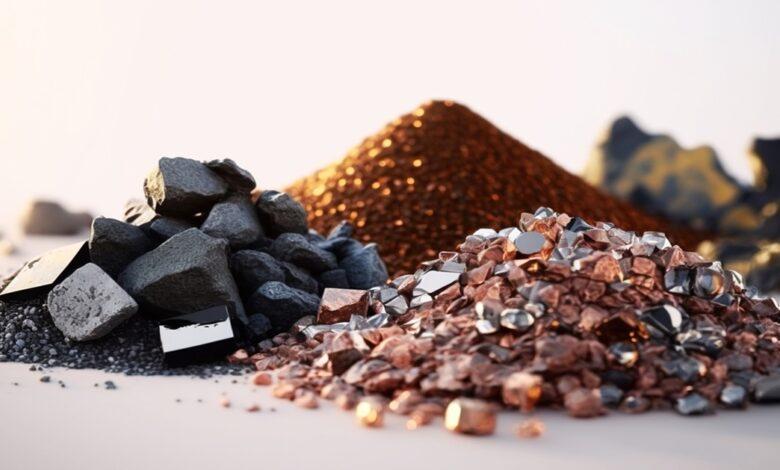
The future of India’s green economy and technological advancement hinges on a single factor: critical minerals. From the silicon and tellurium in our solar panels to the lithium and cobalt in our electric vehicle batteries, these minerals are the bedrock of modern technology. They are not merely commodities; they are the foundation of a nation’s economic power, technological dominance, and national security.
India’s need for these minerals is immediate and urgent. Our ambitious targets for renewable energy-a massive increase in solar capacity from 64 gigawatts and a goal of 140 gigawatts of wind energy by 2030-are impossible without a secure supply chain. Similarly, the National Electric Mobility Mission’s plan to produce 6 to 7 million electric vehicles by 2024 depends entirely on these resources.
Currently, India is precariously dependent on imports, sourcing over 90% of its critical mineral needs from abroad. We rely on Australia for lithium, Congo for cobalt, and China for graphite, spending over ₹20,000 crore annually on these imports. This dependence poses two major risks: price volatility and supply disruption. A sudden price hike could cripple our industries, while a supply blockade-for instance, China restricting exports of a key mineral-could bring our electric vehicle and defense production to a screeching halt. With India’s commitment to achieving net-zero carbon emissions by 2070, relying on foreign sources for these crucial resources is a dangerous gamble.
A Strategic Step -The National Critical Minerals Mission:
Recognizing these challenges, the Indian government launched the National Critical Minerals Mission in 2025. This bold initiative aims to achieve self-sufficiency in the critical minerals sector with a robust plan and significant investment. The mission has allocated a total investment of ₹34,300 crore, with the central government directly contributing ₹16,300 crore and the remaining coming from public sector undertakings.
The Geological Survey of India (GSI) has been tasked with a monumental effort: conducting 1,200 exploration projects between 2024-25 and 2030-31.



The mission’s key objectives are clear:
* Intensify nationwide mineral exploration projects.
* Build a domestic value chain by establishing recycling centers and processing parks.
* Forge long-term agreements with resource-rich countries.
* Develop advanced refining technologies through focused research and development.
* Create strategic mineral reserves to prepare for emergencies.
This is not just another project; it is a strong foundation for “energy self-reliance” in the future.
Progress and Proactive Measures:
The government, in collaboration with the GSI, is already making significant progress. For the 2024-25 fiscal year alone, 195 new exploration projects have been initiated across the country, including 35 in Rajasthan. The primary goal is to locate domestic mineral deposits and reduce our import dependency. As part of this push, over a hundred critical mineral mines are slated for auction.
Exploration has also begun in the deep seas to unearth cobalt, nickel, manganese, and rare earth elements. The GSI operates under the Ministry of Mines, strictly adhering to the United Nations Framework Classification and the Mineral Concession Rules of 2015. These efforts are yielding results. Surveys in Rajasthan’s Sirohi and Bhilwara districts led to a significant discovery in Balotra by the Department of Atomic Energy: approximately 1,11,845 tonnes of rare earth oxide deposits. This is a monumental breakthrough for our nation.
To accelerate project implementation, the government has established a new fast-track approval system and plans to issue new exploration licenses to encourage private sector participation. Regulations have been relaxed to promote the recovery of minerals from industrial waste products like fly ash, tailings, and red mud.
India on the Global Stage:
Our quest for critical minerals extends beyond our borders. India is strategically investing in and acquiring mines in resource-rich nations. Our public and private entities receive funding, guidance, and coordination from the government, with the Ministry of External Affairs providing crucial support.
A significant development in this regard is the agreement signed on January 15, 2024, between Khanij Bidesh India Limited (KABIL) and the Argentinian government to explore for lithium in an area spanning 15,703 hectares. Furthermore, KABIL signed a memorandum of understanding with the Australian government in March 2022 to explore investment opportunities in lithium and cobalt projects.
We must also acknowledge the critical role of Indian Rare Earths Limited (IREL), a public sector undertaking. IREL produces key minerals like ilmenite, rutile, zircon, and sillimanite with an annual processing capacity of six lakh tonnes. The company operates a rare earth extraction plant in Chatrapur, Odisha, and a refining plant in Aluva, Kerala. Since 1997-98, IREL has been consistently profitable, strengthening India’s economy. The company is now focused on expanding its Kollam division and advancing research and development to support the industry.
The Challenges and Solutions:
Despite this progress, the mission faces significant challenges. The high cost and time required for exploration-given that these minerals are often buried deep in mountains or underground-is a major hurdle. Environmental concerns, such as deforestation and water pollution, along with potential public protests, also pose risks.
International competition is another formidable challenge. With countries like China, the US, and Australia already dominating this sector, India must carve out its own space. A lack of advanced refining and recycling technologies is a crucial weakness. Without them, we would be forced to import raw minerals and lose out on the value-added benefits.
However, the government is taking proactive steps to overcome these challenges. Transparent mine auction policies are in place to increase private sector participation. Incentives are being offered to companies that adopt eco-friendly mining practices. KABIL is actively securing agreements abroad, and India has already acquired lithium blocks in Argentina. To promote domestic recycling, customs duties are being waived, and a special incentive package for rare earth processing is in the works.
A Comprehensive Strategy for the Future:
Critical minerals are the bedrock of a nation’s national security, energy self-reliance, and technological supremacy. In this context, the National Critical Minerals Mission is a historic step. With proper implementation, it will pave the way for India to become a developed nation. But this is not the government’s responsibility alone. Industries, research institutions, and civil society must all work together. It is our collective duty to leave a legacy of abundant mineral resources and a self-reliant economy for future generations.