Why the Strait of Hormuz reopening won’t end inflation and supply chain disruptions?

” The reopening of the Strait of Hormuz has restored the flow of ships, but it has not restored economic stability. While oil markets have begun to recover, the deeper consequences of months of disruption persistent inflation, rising food prices, fiscal strain, and fragile supply chains continue to reverberate across the global economy. For many developing nations, the most difficult phase of the crisis may still lie ahead.”
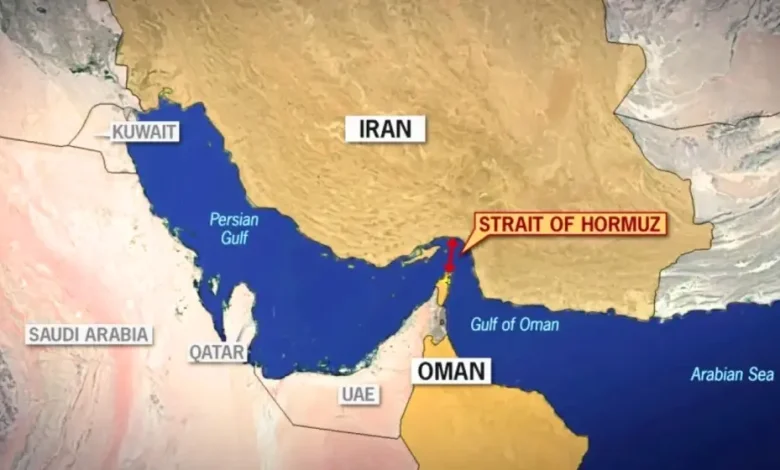
The reopening of the Strait of Hormuz after more than one hundred days of disruption has undoubtedly brought relief to global energy markets and international trade. Yet, assuming that the crisis has ended simply because ships have resumed their passage would be a serious mistake. The Strait’s reopening marks only the beginning of recovery, not its completion. The economic damage inflicted during the prolonged disruption has already spread far beyond the Gulf, creating ripple effects that continue to shape inflation, food security, public finances, and economic stability across the world. For many developing economies, the most difficult phase may still lie ahead.
Why the Strait of Hormuz reopening won’t end inflation?
The Strait of Hormuz is far more than a strategic waterway connecting the Persian Gulf to global markets. It is one of the world’s most critical energy corridors, through which a substantial share of global crude oil exports passes every day. During the crisis, military tensions dramatically reduced commercial shipping, triggering fears of supply shortages and driving international crude oil prices sharply higher. Although benchmark prices such as Brent, West Texas Intermediate (WTI), Dubai, and Urals crude began to decline after the announcement of an agreement to reopen the Strait, falling oil prices alone cannot erase the economic consequences of months of disrupted trade. Shipping companies continue to face elevated insurance premiums, longer sailing routes, logistical bottlenecks, and supply-chain adjustments that keep transportation costs well above pre-crisis levels. Energy markets may react quickly, but global trade systems recover far more slowly.
Rising inflation and food security challenges continue after the Hormuz crisis
The consequences of this disruption extend well beyond the energy sector. Higher oil and natural gas prices increased transportation costs across industries, while rising fertilizer prices pushed agricultural production costs upward. Farmers were forced to spend more on fuel, electricity, irrigation, machinery, and nitrogen based fertilizers, making food production significantly more expensive. These increased production costs eventually translated into higher food prices, extending inflation far beyond fuel markets. What initially appeared to be an energy crisis gradually evolved into a broader food security crisis, demonstrating how interconnected today’s global economy has become.
The burden of these shocks has not been shared equally. Countries heavily dependent on imported fuel and staple food have suffered disproportionately. According to UNCTAD, many Least Developed Countries (LDCs) and Small Island Developing States (SIDS) face dual vulnerability because they rely extensively on imports of both petroleum products and cereals. Any disruption in global shipping immediately raises their import bills, weakens their external balances, and fuels domestic inflation. Several small island economies spend an exceptionally large share of their GDP on oil imports, making them particularly vulnerable to fluctuations in international energy prices. Likewise, many low income countries depend heavily on imported cereals, leaving millions of people exposed whenever food prices rise in global markets.
Developing economies face prolonged economic aftershocks
These vulnerabilities are further intensified by weak fiscal capacity. Many developing economies entered this crisis already burdened by high external debt, limited domestic revenue, declining international development assistance, and growing exchange-rate pressures. Governments with constrained budgets have little room to subsidize fuel, stabilize food prices, or expand social protection programs during periods of economic stress. Declining remittances have also reduced household incomes in several countries, removing an important financial safety net for vulnerable families. Consequently, even a temporary disruption in global trade can create long-lasting economic and social damage in countries least equipped to absorb external shocks.


Perhaps the most concerning aspect of the Hormuz crisis is that its inflationary effects are likely to persist long after oil prices stabilize. Recent evidence suggests that, since the COVID-19 pandemic, energy price shocks have had a stronger and more persistent impact on consumer inflation than in previous decades. While international oil prices often decline relatively quickly once geopolitical tensions ease, food prices respond much more slowly. Higher transportation costs, increased production expenses, supply-chain disruptions, and delayed market adjustments continue to keep food inflation elevated even after commodity prices begin to fall. As a result, households continue to face rising living costs despite apparent improvements in international markets.
The humanitarian implications of persistent food inflation are equally alarming. Rising food prices disproportionately affect poor households, which spend a larger share of their income on essential goods. Children are especially vulnerable. Research covering more than 1.27 million preschool children across developing countries shows that even a modest increase in real food prices significantly raises the risk of acute malnutrition, particularly among children under five years of age, infants, and poor rural households. Temporary disruptions in global trade can therefore leave permanent scars on human development, affecting health, education, and productivity for years to come.
What the Strait of Hormuz crisis means for India and the global economy?
For countries like India, the Hormuz episode offers an important strategic lesson. Although India has strengthened its foreign exchange reserves and diversified certain sources of energy imports, it remains one of the world’s largest importers of crude oil. Any sustained disruption in the Strait of Hormuz can quickly raise domestic fuel prices, increase fertilizer costs, fuel food inflation, widen the current account deficit, and place additional pressure on public finances. The crisis underscores the importance of expanding strategic petroleum reserves, diversifying energy suppliers, strengthening domestic logistics, promoting renewable energy, and building greater resilience into national supply chains.
Ultimately, the Hormuz crisis demonstrates that the global economy remains highly dependent on a handful of strategic maritime chokepoints. As geopolitical rivalries intensify and climate related disruptions become more frequent, similar shocks are likely to occur again. The lesson is clear: economic resilience cannot be built merely by reopening trade routes after a crisis. It requires diversified supply chains, stronger international cooperation, sustained investment in food and energy security, and greater financial support for vulnerable economies. The Strait of Hormuz may have reopened, but the economic aftershocks of its closure will continue to shape the global economy for many months, reminding policymakers that, in an interconnected world, regional conflicts rarely remain regional in their consequences.
Read More:
Hormuz Reopening Gains Momentum as Trump Says Strait Will Fully Reopen by Friday
Iran Introduces New Strait of Hormuz Transit Rules for Ships
Iran closes Strait of Hormuz again, cites MoU violation by US and Israel