Interlinking of Rivers in Andhra Pradesh: Optimum Utilization in Water Resources Management

Recently, the Chief Minister of Andhra Pradesh, Shri Nara Chandrababu Naidu, stated that Interlinking of Rivers in Andhra Pradesh is one of his dreams. However, this is not a new concept. Numerous proposals and plans on this subject have emerged in the past as well. But the primary question currently remains whether this river linking is practically feasible or not. River interlinking is the process of connecting rivers through canals, reservoirs, or pipelines to transfer water from water-surplus regions to water-scarce regions. Its main objective is to distribute water resources equitably across different regions. Through this method, irrigation water can be provided to drought-prone areas, thereby boosting agricultural productivity. Additionally, improving the supply of drinking water to the growing urban and rural populations is also one of its key purposes. It also helps reduce flood damages by diverting excess water from flood-prone river basins. Furthermore, the interlinking of rivers contributes to hydropower generation, inland water transport, and regional development.
Countries like the United States, Australia, Spain, India, China, and South Africa are among those that have undertaken this type of river interlinking. Among the many benefits of river interlinking, the expansion of irrigation, improvement of drinking water supply, flood control, and hydropower generation are the most significant. For instance, China transfers billions of cubic meters of water every year to its water-scarce northern regions, benefiting major cities like Beijing. In Spain, water transfer is aiding agricultural development in the arid lands of the southeastern regions. However, river interlinking is an extremely expensive process. For example, the cost of China’s water diversion project exceeds 60 billion US dollars. Due to such massive projects, many families are forced to leave their residential areas, requiring thousands of people to be rehabilitated. Furthermore, environmental and habitat loss, changes in river ecosystems, fish migration routes, and the health of wetlands are also adversely affected by water transfer.
Interlinking of Rivers in India
Due to India’s extensive river system and the seasonal variations in water availability, the interlinking of rivers is considered technically feasible. India has proposed to connect the water-surplus Himalayan rivers with the water-scarce peninsular rivers. A prime example within this plan is the Ken-Betwa River linking project. This project aims to transfer approximately 1,000 million cubic meters (MCM) of water every year from Madhya Pradesh to Uttar Pradesh. Another important proposal is the Godavari-Krishna-Cauvery River interlinking system, which is intended to meet the water needs of the southern Indian states. Theoretically, this river linking plan has the potential to provide irrigation to over 35–40 million hectares of land. It would also help mitigate the impact of droughts in states like Maharashtra, Karnataka, and Tamil Nadu. Furthermore, the problem of floods can be reduced to some extent by diverting the excess water that flows during the monsoon season in states like Assam and Bihar. It is estimated that building a full-scale nationwide river interlinking network would cost over ₹10–12 lakh crores.
Interlinking of Rivers in Andhra Pradesh
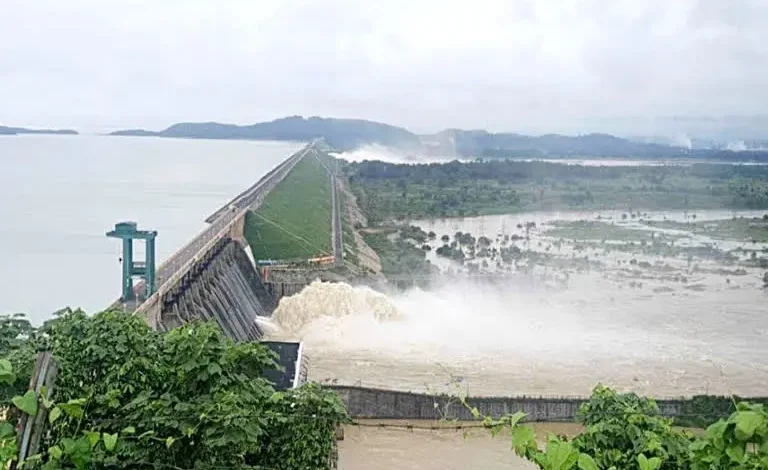
The interlinking of rivers in Andhra Pradesh is closely tied to the vision of Shri Nara Chandrababu Naidu to improve water security and irrigation facilities in the state. The Godavari-Krishna River link, particularly the transfer of water through the Polavaram-Vijayawada system, is considered the primary opportunity for river interlinking in the state. Through the already operational Pattiseema Lift Irrigation Scheme, water is being transferred from the Godavari River to the Krishna Delta. This has proven that the interlinking of rivers is technically feasible. By further expanding this system, there is a possibility to provide water even to drought-prone Rayalaseema regions like Anantapur and Kurnool. The main benefit of these projects is ensuring a continuous supply of irrigation water for agriculture. This will increase crop yields and provide a significant boost to the development of the state’s agricultural sector. Additionally, drinking water security can also be improved for cities such as Amaravati, Vijayawada, and Visakhapatnam. Through increased crop productivity and the development of allied industries, the state has the potential to achieve thousands of crores of rupees in economic benefits every year.
The implementation of these projects requires massive expenditure. According to policy discussions, for instance, the estimated cost of the Polavaram–Banakacharla interlinking project is expected to be around ₹58,000 crores to ₹80,000 crores. It is estimated that an investment of approximately ₹70,000 crores would be required to implement the full-scale plans, including the Godavari–Krishna–Penna rivers interlinking. It is estimated that over ₹14,000 crores have already been spent on rehabilitation and resettlement programs. Providing proper rehabilitation to the affected families stands out as a crucial social issue. On the other hand, there is a possibility of disputes arising with the states of Telangana, Odisha, and Chhattisgarh over the utilization of Godavari waters. These could lead to legal delays under the purview of the Interstate River Water Disputes Act. He also proposed utilizing Public-Private Partnership (PPP) models to mobilize the funds required for these mega projects. It was envisioned that this would accelerate project implementation and reduce the financial burden.
To develop a comprehensive, large-scale river interlinking system across the state, the cost is likely to reach around ₹1–2 lakh crores. Of this, the cost of the Polavaram project alone has reached approximately ₹55,000 crores. Additionally, these projects also bring some negative impacts. Furthermore, rainfall patterns are shifting due to the impact of climate change. Consequently, estimates of “surplus water” may not remain accurate. Therefore, while the interlinking of rivers in Andhra Pradesh is highly feasible and has already been implemented to some extent, phased investments, comprehensive planning, and environmental protection measures are absolutely essential to achieve long-term success.



Measures for River Interlinking in Andhra Pradesh
For the successful implementation of river interlinking projects in Andhra Pradesh, several effective measures need to be adopted. Building upon the already successful lift irrigation schemes, implementing large-scale projects in a phased manner can mitigate financial and technical risks. It is essential to conduct a comprehensive Environmental Impact Assessment (EIA) for each project and undertake special measures for the conservation of forest areas and biodiversity. Furthermore, using existing canal systems instead of constructing new ones can significantly minimize the need for land acquisition and reduce construction costs. To mobilize the required funds for the projects, Public-Private Partnership (PPP) models and the cooperation of the Central Government’s national irrigation schemes should be widely utilized. To minimize interstate water disputes, River Management Boards should be established, and mutually agreeable water-sharing pacts must be secured. Additionally, continuous scientific monitoring of climate change, water availability, and river inflows must be conducted. Implementing water management plans adapted to these changing weather conditions will ensure the stability and long-term benefits of the projects. Through scientific planning, phased implementation, environmental conservation, and coordination among states, the prospects for the long-term success of these projects will be greatly enhanced.
Read More:
Chandrababu Naidu reviews progress of Polavaram Project
Blueprint to be prepared to complete irrigation projects: Chandrababu Naidu
My vision is to interlink rivers across Andhra Pradesh, says CM Chandrababu Naidu
Pumped Storage Projects in Andhra Pradesh to Be Studied at 130 Reservoirs